Men’s ethnic fashion in 2026 is becoming more interesting, more individual and considerably more versatile.
The kurta remains one of the foundations of Indian menswear, but the way men are wearing it is changing.
Instead of depending entirely on heavy embroidery or excessive embellishment, contemporary kurta dressing increasingly allows fabric, texture, fit, proportion and layering to create the visual impact.
That shift is particularly important for premium fabrics.
A beautifully woven textile can make even a relatively clean kurta silhouette look distinctive. A self-jacquard can create understated luxury. Geometric Banarasi fabric can transform a traditional kurta into something contemporary. Brocade can create wedding richness, while pastels and tonal patterns can produce softer daytime looks.
At Choubey Silk, Varanasi, our focus is on premium fabrics for men’s ethnic, wedding and occasion wear.
Our collections include Banarasi jacquard, brocade, Katan silk, Moonga, Chiniya, raw silk, satin-based fabrics and other premium woven textiles suitable for kurtas, sherwanis, Indo-Western outfits, Nehru jackets, bandhgalas and wedding jackets.
So, which men’s kurta styles deserve attention in 2026?
Here are 10 men’s kurta style directions for 2026, along with practical guidance on choosing the right fabric, colour, pattern, trousers, jacket and accessories for each look.
Why Men’s Kurta Fashion Is Changing in 2026
For years, men’s wedding and festive dressing often followed a relatively predictable formula:
Kurta.
Churidar or pyjama.
Nehru jacket.
Sherwani for the main wedding.
That wardrobe still has an important place, but the options have expanded considerably.
Men now have access to:
- Minimal kurtas
- Textured kurtas
- Tonal jacquards
- Geometric designs
- Contemporary short kurtas
- Layered looks
- Relaxed silhouettes
- Structured jackets
- Indo-Western combinations
- Statement wedding textiles
The result is not the disappearance of traditional Indian clothing.
It is greater freedom in how that clothing is interpreted.
Fabric Is Becoming More Important Than Excessive Decoratio
One of the most useful principles for men’s kurta dressing in 2026 is simple:
Let the textile do more of the work.
A premium fabric already contains visual information.
The weave creates texture.
The yarn creates character.
Jacquard creates pattern.
Zari reflects light.
Silk adds lustre.
Brocade creates richness.
When these elements are already present, the garment may not require excessive additional embellishment.
This makes Banarasi fabrics particularly relevant to modern kurta design.
Trend 1: The Textured Self-Jacquard Kurta
One of the most sophisticated directions for 2026 is also one of the least complicated.
The self-jacquard kurta uses woven pattern rather than strong colour contrast to create visual interest.
From a distance, the garment may appear relatively minimal.
At closer range, the jacquard reveals texture, pattern and depth.
This balance makes self-jacquard particularly suitable for men who want premium ethnic wear without excessive ornamentation.
Best Colours
Consider:
- Ivory
- Cream
- Champagne
- Beige
- Baby pink
- Pista
- Powder blue
- Lavender
- Navy
- Wine
Lighter shades work particularly well for daytime functions.
Darker self-jacquards can create sophisticated evening outfits.
Best Occasions
A self-jacquard kurta can work for:
- Engagements
- Festive gatherings
- Wedding functions
- Family celebrations
- Reception-related events
- Premium evening occasions
How to Wear It
Keep the styling clean.
Pair an ivory or champagne self-jacquard kurta with straight trousers or a clean pyjama.
For footwear, choose understated juttis, mojaris or another refined traditional option.
If the textile already has strong woven texture, avoid adding too many competing accessories.
For a more formal wedding look, add a Nehru jacket in a complementary tone.
Choubey Silk Fabric Direction
Look for tonal Banarasi jacquard with a restrained repeat.
The woven design should be visible enough to provide character without overpowering the garment.
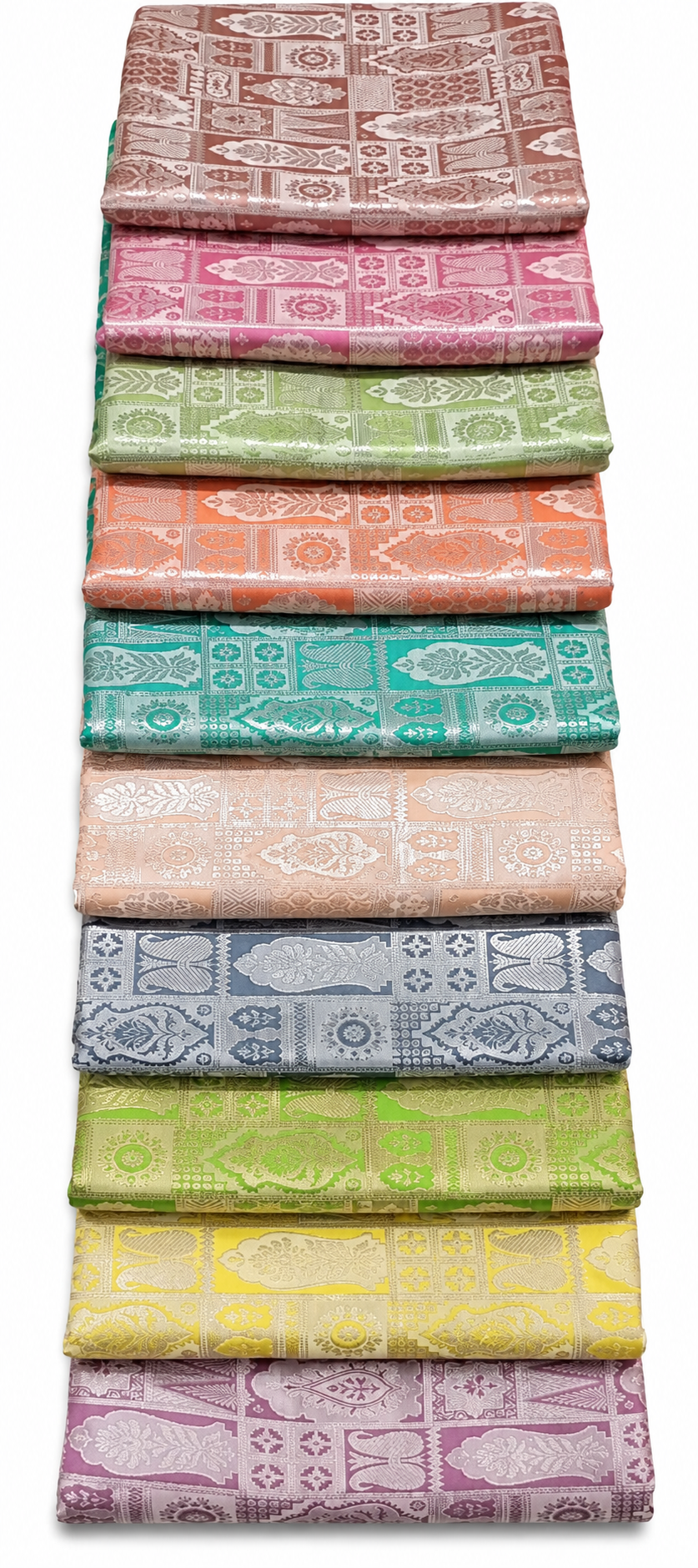
Trend 2: The Geometric Banarasi Jacquard Kurta
Geometry is one of the most useful ways to make Indian menswear feel contemporary.
Instead of conventional floral motifs, designers can work with:
- Diamonds
- Grids
- Interlocking forms
- Linear patterns
- Architectural motifs
- Abstract repeats
Geometric Banarasi jacquard creates an interesting relationship between traditional woven textile techniques and contemporary visual design.
Why It Works
Geometric patterns already feel natural within menswear.
Men are familiar with checks, stripes and structured patterns through shirts, suits and jackets.
Translating similar visual ideas into Banarasi jacquard allows the kurta to feel modern while retaining the richness of a woven Indian textile.
Best Colours
Try:
- Ivory with antique gold
- Champagne with copper
- Beige tonal geometry
- Pista with subtle metallic detail
- Baby pink with antique gold
- Navy with tonal or metallic geometry
- Wine with restrained gold
How to Wear It
The geometric kurta works best when the rest of the outfit remains relatively clean.
Pair it with straight trousers rather than an excessively decorative lower garment.
For a contemporary wedding look, combine the kurta with a plain or subtly textured Nehru jacket.
Avoid combining a strong geometric kurta with an equally strong patterned jacket unless the patterns have been intentionally designed to work together.
Best For
- Engagements
- Sangeet
- Wedding guests
- Contemporary grooms
- Festive evening events
- Indo-Western styling
Trend 3: The Minimal Ivory Kurta
Ivory continues to have enormous relevance in men’s ethnic fashion because it is not one fixed look.
An ivory kurta can be:
Minimal.
Traditional.
Contemporary.
Festive.
Luxurious.
The result depends on the fabric.
An ivory plain textile produces a completely different garment from ivory self-jacquard.
Add antique gold geometry and it changes again.
Introduce small woven butis and the outfit develops another identity.
Why Ivory Works in 2026
Modern wedding wardrobes increasingly benefit from colours that can be styled in multiple ways.
Ivory provides a neutral foundation.
It can coordinate with:
- Gold
- Antique gold
- Copper
- Pastels
- Beige
- Champagne
- Deep jewel tones
This makes an ivory kurta extremely versatile.
How to Wear It
For daytime elegance, pair an ivory woven kurta with ivory or cream trousers.
For a wedding function, add a pastel Nehru jacket.
For a more contemporary look, use an antique-gold geometric jacket.
For a stronger groom outfit, layer the ivory kurta beneath a richer Banarasi jacket or bandhgala.
Fabric Direction
Instead of choosing a completely flat ivory fabric, consider:
- Self-jacquard
- Small butis
- Tonal geometry
- Restrained zari
- Katan silk
- Fine woven texture
The aim is understated richness.
Trend 4: The Pastel Wedding Kurta
Pastels continue to be important in men’s wedding wardrobes.
They are particularly suitable for daytime events and wedding environments where the overall palette is softer.
Popular directions include:
- Baby pink
- Pista
- Sage
- Powder blue
- Lavender
- Peach
- Soft champagne
But colour alone is not enough.
The fabric determines whether a pastel kurta looks ordinary or premium.
How Banarasi Jacquard Improves a Pastel Kurta
A flat pastel can sometimes appear too simple.
Jacquard adds depth.
A baby pink fabric with tonal geometry becomes more interesting.
Pista with antique gold can look festive.
Powder blue self-jacquard can feel sophisticated.
Lavender with small woven motifs can create contemporary wedding wear.
How to Wear It
Keep the trousers relatively neutral.
Ivory, cream and off-white can work well with many pastel kurtas.
For a tonal wedding look, use a jacket from the same colour family but with a different texture.
Alternatively, contrast a pastel kurta with an ivory or champagne Nehru jacket.
Best Occasions
- Mehendi
- Engagement
- Day wedding
- Destination wedding
- Festive lunch
- Wedding guest dressing
Trend 5: The Small-Buti Banarasi Kurta
Large patterns create drama.
Small motifs create versatility.
For men’s kurtas, small Banarasi butis can be particularly effective because they provide consistent visual interest without dominating the silhouette.
The buti can be:
- Floral
- Geometric
- Metallic
- Tonal
- Heritage-inspired
- Meena-accented
Why Small Butis Work
A kurta contains several garment sections:
- Front
- Back
- Sleeves
- Collar
- Placket
- Cuffs
Smaller repeating motifs can transition across these areas relatively naturally.
They also allow designers to create a rich textile without making the garment visually heavy.
How to Wear It
For a traditional wedding look, choose ivory or cream with gold butis.
For something more contemporary, consider champagne with antique gold.
For a youthful festive look, choose a pastel base with small motifs.
Keep accessories controlled.
The repeated woven pattern already provides detail.
Best For
- Wedding guests
- Groom pre-wedding events
- Festivals
- Engagements
- Family celebrations
Trend 6: The Shorter Contemporary Kurta
The modern kurta wardrobe does not have to revolve entirely around long, formal silhouettes.
A shorter kurta can create a more relaxed, contemporary proportion.
The exact length should still complement the wearer’s height and body proportions, but reducing the length can make the outfit feel less ceremonial and easier to style with modern trousers.
Fabric Matters Even More
A shorter garment provides less surface area.
This means pattern scale becomes important.
Small geometric jacquards, self-patterns, checks and stripes can work particularly well.
Very large motifs may lose their visual impact when the garment is cut shorter.
How to Wear It
Pair a shorter kurta with:
- Straight trousers
- Tapered trousers
- Clean pyjamas
- Contemporary footwear
Avoid excessive volume in the lower half unless the silhouette has been intentionally designed around it.
A short kurta can also work under a longer jacket, creating interesting proportions.
Best Fabric Directions
- Geometric jacquard
- Self-jacquard
- Checks
- Stripes
- Small butis
- Textured silk fabrics
Trend 7: The Kurta with a Statement Nehru Jacket
Layering remains one of the most effective ways to change a kurta outfit.
The simplest principle is:
Let either the kurta or the jacket become the hero.
If the kurta is heavily patterned, use a quieter jacket.
If the kurta is minimal, the jacket can become the statement piece.
This is particularly useful for Banarasi fabrics.
Look 1: Plain Kurta + Banarasi Jacquard Jacket
This is one of the easiest ways to introduce rich woven fabric without making the complete outfit overly decorative.
Try a plain ivory kurta with:
- Floral brocade jacket
- Geometric jacquard jacket
- Antique gold Banarasi jacket
- Pastel woven jacket
Look 2: Jacquard Kurta + Plain Jacket
Reverse the balance.
A patterned kurta can be paired with a solid or tonal jacket.
This creates a more subtle layered effect.
Best For
- Weddings
- Engagements
- Festivals
- Groom pre-wedding functions
- Formal family events
Fabric Direction
For the statement jacket, designers can consider stronger motifs than they might use across a full kurta.
Because the surface area is smaller, a richer textile can remain balanced.
Trend 8: The Tonal Monochrome Kurta Look
Monochrome does not mean boring.
One of the most refined ways to wear a kurta in 2026 is to build the outfit around different textures within the same colour family.
Imagine:
An ivory self-jacquard kurta.
Ivory straight trousers.
An ivory or cream jacket with slightly richer texture.
The colours remain closely related, but the textile surfaces create dimension.
Why Tonal Dressing Works
Strong colour contrast divides an outfit visually.
Tonal dressing creates a longer, cleaner line.
This can make the outfit appear more refined.
Texture becomes particularly important because it prevents the look from becoming flat.
Colour Families to Explore
- Ivory and cream
- Champagne and beige
- Baby pink and blush
- Pista and sage
- Navy and deep blue
- Wine and maroon
How to Wear It
Choose one piece with the strongest texture.
If the kurta is woven jacquard, keep the trousers clean.
If the jacket has rich brocade, use a more restrained kurta.
Footwear can remain within the same neutral or tonal family.
Trend 9: The Kurta with Antique Gold or Copper Detailing
Metallics remain relevant to Indian wedding wear, but modern styling does not always require extremely bright gold.
Antique gold and copper can provide a more restrained alternative.
These metallic tones work particularly well within woven jacquard.
Antique Gold
Pairs effectively with:
- Ivory
- Cream
- Champagne
- Beige
- Pista
- Baby pink
- Navy
- Wine
Copper
Works particularly well with:
- Champagne
- Beige
- Pista
- Pink
- Dark blue
- Wine
How to Wear It
Allow the metallic pattern to provide the festive character.
Avoid adding too many additional shiny elements.
If the kurta has antique-gold geometry, use understated buttons and relatively simple footwear.
For wedding styling, the metallic detail can coordinate with the jacket or accessories without requiring an exact match.
Best For
- Engagement
- Sangeet
- Wedding
- Reception
- Groom wear
Trend 10: The Kurta as Part of an Indo-Western Layered Look
Perhaps the most versatile kurta direction in 2026 is not one specific kurta cut at all.
It is the kurta used as a foundation for Indo-Western layering.
The kurta can sit beneath:
- A structured jacket
- A bandhgala
- A long jacket
- An asymmetric layer
- A Nehru jacket
This allows the same basic garment to participate in very different looks.
Why This Matters
Men increasingly need wedding wardrobes that work across multiple events.
A good kurta can potentially be styled differently rather than functioning as a single-use outfit.
For example:
Look One: Ivory self-jacquard kurta with straight trousers.
Look Two: The same kurta with a Banarasi Nehru jacket.
Look Three: The kurta beneath a structured bandhgala.
This makes fabric selection particularly important.
The kurta needs enough character to work independently while remaining versatile enough for layering.
Bonus Direction: Texture Over Excessive Embellishment
Although this is not a separate silhouette, it is one of the most important styling ideas connecting all ten trends.
A kurta does not need to be covered in additional decoration to feel premium.
The fabric itself can provide:
- Texture
- Pattern
- Lustre
- Metallic character
- Depth
- Movement
This is particularly relevant to Banarasi jacquard and other woven textiles.
A well-selected fabric combined with thoughtful tailoring can often create a stronger result than simply adding more decorative elements.
How to Choose a Kurta According to Your Body Proportions
Trends should never replace proportion.
The correct kurta should complement the wearer.
Shoulder
The garment should sit cleanly around the natural shoulder.
Body
There should be enough ease for comfortable movement without unnecessary excess fabric.
Length
Length should work with the wearer’s height and the intended silhouette.
Sleeve
Sleeves should look clean rather than creating unintended volume.
Lower Garment
The trousers or pyjama should balance the kurta.
A voluminous upper silhouette can benefit from a cleaner lower half.
Straight Trousers with Kurtas
Straight trousers are one of the easiest ways to give traditional kurtas a contemporary appearance.
They provide a cleaner line than some more traditional bottom-wear options.
They can work particularly well with:
- Geometric kurtas
- Shorter kurtas
- Self-jacquard
- Indo-Western outfits
Ivory or off-white trousers can coordinate with a wide range of kurta colours.
Churidar with Traditional Kurtas
The churidar remains relevant when a more traditional silhouette is desired.
It can work especially well with:
- Longer kurtas
- Traditional floral fabrics
- Wedding outfits
- Heritage-inspired styling
The choice between churidar and straight trousers should be based on the complete look rather than a universal rule.
How to Layer a Kurta Correctly
Layering should create hierarchy.
If everything competes for attention, the outfit becomes visually confusing.
Use one dominant element.
Statement Kurta
Choose a quieter jacket.
Statement Jacket
Use a cleaner kurta.
Tonal Look
Use texture differences rather than strong colour contrast.
Rich Brocade Layer
Keep the inner garment restrained.
This principle is particularly useful when styling Banarasi fabrics.
Kurta Styles for Engagements in 2026
Engagement dressing often works best when it feels premium but not excessively ceremonial.
Consider:
- Champagne self-jacquard
- Ivory geometry
- Beige tonal jacquard
- Pastel woven fabrics
- Antique gold details
A Nehru jacket can increase formality when required.
Kurta Styles for Mehendi
Mehendi outfits allow greater colour experimentation.
Consider:
- Pista
- Sage
- Baby pink
- Peach
- Powder blue
Small butis and floral jacquards can create festive character without excessive heaviness.
Kurta Styles for Haldi
Comfort and colour often become important for haldi functions.
Depending on the event, lighter-looking textiles and relatively clean silhouettes may be more practical.
The fabric should allow movement and suit the setting.
Kurta Styles for Sangeet
Sangeet dressing can support stronger evening textiles.
Consider:
- Navy jacquard
- Wine
- Metallic geometry
- Antique gold
- Copper detailing
- Dark tonal patterns
A structured jacket can turn the kurta into a more formal evening outfit.
Kurta Styles for Wedding Guests
Wedding guests need enough visual character for the occasion without necessarily adopting the ceremonial richness of the groom.
Good options include:
- Pastel jacquard
- Small butis
- Self-jacquard
- Geometric Banarasi fabric
- Subtle zari
These fabrics can create festive clothing while remaining versatile.
Kurta Styles for Grooms
The modern groom may wear kurtas across several wedding functions.
This means one groom wardrobe can explore multiple textile directions.
Engagement
Champagne or ivory self-jacquard.
Mehendi
Pastel jacquard or small motifs.
Sangeet
Geometric metallic fabric.
Wedding Morning
Premium silk or refined Banarasi woven textile.
Reception Styling
Dark kurta layered with a bandhgala or jacket.
Each event can express a different part of the groom’s personal style.
Daytime vs Evening Kurta Fabrics
Lighting changes the way textiles appear.
Daytime
Consider:
- Ivory
- Cream
- Champagne
- Pastels
- Subtle jacquard
- Smaller motifs
Natural light can reveal woven texture beautifully.
Evening
Consider:
- Navy
- Wine
- Maroon
- Deeper colours
- Metallic jacquards
- Richer woven patterns
Artificial lighting can emphasise metallic and lustrous surfaces.
Banarasi Jacquard for 2026 Kurta Fashion
Banarasi jacquard is particularly well suited to the current move toward textile-led dressing.
Instead of relying on surface embellishment, the woven design itself provides character.
Possible directions include:
- Self-jacquard
- Geometry
- Florals
- Butis
- Checks
- Stripes
- Zari patterns
This diversity allows designers to respond to multiple kurta trends using one broad textile tradition.
Katan Silk for Premium Kurtas
Katan silk can provide refined silk character for premium men’s wear.
Depending on the specific fabric and construction, it can be considered for:
- Wedding kurtas
- Groom kurtas
- Designer kurtas
- Layered ethnic outfits
For a more minimal look, the textile’s surface and natural character can become the primary visual element.
Banarasi Brocade for Statement Kurta Styling
Brocade generally creates a richer appearance.
For a full kurta, pattern scale and overall richness should be considered carefully.
Another approach is to use brocade for a jacket over a relatively minimal kurta.
This concentrates the visual impact and can create a more contemporary layered outfit.
Checks and Stripes for Modern Kurta Design
Checks and stripes are especially interesting because they connect Indian woven textiles with familiar menswear patterns.
A tonal check can create a contemporary kurta.
A subtle stripe can visually lengthen the silhouette.
Metallic grids can provide wedding character.
These patterns are particularly useful for designers trying to move beyond conventional floral kurta fabrics.
How Fashion Designers Can Use These 2026 Kurta Trends
Designers do not need to follow every trend in one collection.
A stronger approach is to build a clear textile story.
For example:
Minimal Luxury Collection
Self-jacquard, ivory, champagne and tonal fabrics.
Contemporary Banarasi Collection
Geometry, checks, stripes and abstract woven patterns.
Modern Wedding Collection
Pastels, antique gold, small butis and subtle zari.
Evening Collection
Navy, wine, dark jacquards and metallic geometry.
This creates a more coherent brand identity.
Kurta Fabrics for Boutiques and Retailers
Boutiques can build a balanced assortment around different customer preferences.
A practical collection could include:
- Ivory self-jacquard
- Champagne geometry
- Pastel floral jacquard
- Small buti fabric
- Dark evening jacquard
- Checks
- Stripes
- Brocade for jackets
This allows customers to explore both traditional and contemporary directions.
Wholesale Men’s Kurta Fabrics
Wholesale buyers should consider more than colour and pattern.
Important factors include:
- Fabric category
- Width
- Weight
- Pattern repeat
- Motif direction
- Colour
- Quantity
- Garment size range
- Production schedule
For larger manufacturing requirements, cutting efficiency becomes particularly important.
Kurta Fabrics for Garment Manufacturers
A beautiful textile still needs to work efficiently in production.
Manufacturers should evaluate:
- Usable width
- Repeat size
- Pattern direction
- Motif placement
- Cutting requirements
- Garment consumption
Checks and stripes may need alignment.
Large motifs can require careful placement.
These factors can affect fabric usage and production planning.
Kurta Fabrics for International Buyers
Indian ethnic and wedding fashion has a broad international customer base.
Designers, boutiques, wedding retailers and garment manufacturers serving markets such as the United States, United Kingdom, UAE, Canada, Australia, Europe and the Middle East may source Indian fabrics for men’s kurta collections.
Different markets can favour different aesthetics.
Contemporary boutiques may prefer geometry.
Traditional wedding retailers may choose floral fabrics.
Destination-wedding businesses may focus on pastels.
Premium menswear labels may prefer understated self-jacquards.
This makes fabric diversity important.
Why Source Men’s Kurta Fabrics from Varanasi?
Varanasi offers access to a broad textile vocabulary associated with Banarasi weaving and design.
For modern kurta collections, buyers can explore:
- Banarasi jacquard
- Brocade
- Katan silk
- Self-patterns
- Geometry
- Florals
- Butis
- Checks
- Stripes
- Zari
- Contemporary designs
This gives designers and retailers the ability to develop multiple fashion directions while maintaining a connection with Banarasi textile heritage.
Choubey Silk – Premium Men’s Kurta Fabrics in Varanasi
At Choubey Silk, Varanasi, our focus is on premium fabrics for men’s ethnic, wedding and occasion wear.
Our collections can be explored for:
- Designer kurtas
- Festive kurtas
- Wedding kurtas
- Groom kurtas
- Sherwanis
- Indo-Western outfits
- Nehru jackets
- Bandhgalas
- Wedding jackets
Our broader textile selection includes Banarasi jacquard, brocade, Katan silk, Moonga, Chiniya, raw silk, satin-based fabrics and other premium woven textiles.
We cater to different requirements, including individual customers, fashion designers, boutiques, retailers, wholesalers, garment manufacturers and international buyers.
How to Enquire for Men’s Kurta Fabrics at Choubey Silk
The more specific the requirement, the more focused the fabric selection can become.
Instead of asking:
“Show me kurta fabric.”
Try:
“I need ivory self-jacquard for premium men’s kurtas.”
“I am looking for geometric Banarasi jacquard for a contemporary kurta collection.”
“I require pastel wedding kurta fabrics.”
“I need small-buti Banarasi jacquard for men’s festive kurtas.”
“I require wholesale kurta fabric for garment manufacturing.”
Useful information includes: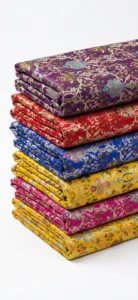
- Garment type
- Fabric category
- Pattern
- Colour
- Quantity
- Motif scale
- Destination
- Required timeframe
How to Choose the Right Men’s Kurta Fabric in 2026
Before purchasing, consider eight questions.
1. What Is the Occasion?
Festive event, engagement, mehendi, sangeet, wedding or reception?
2. What Is the Desired Style?
Traditional, contemporary, minimal or statement?
3. Which Pattern Works Best?
Self-jacquard, geometric, floral, buti, check or stripe?
4. Which Colour Fits the Event?
Ivory, champagne, pastel or dark?
5. How Much Metallic Detail Is Needed?
None, subtle zari, antique gold, copper or richer metallic design?
6. What Is the Garment Silhouette?
Long, short, relaxed, straight or layered?
7. How Should the Fabric Behave?
Consider weight, structure and drape.
8. What Are the Production Requirements?
For commercial orders, consider width, repeat, direction and quantity.
The Most Important Men’s Kurta Trend of 2026: Individuality
If there is one idea connecting the strongest directions in men’s fashion, it is that there is no longer only one correct way to dress for an Indian celebration.
One man may prefer an ivory self-jacquard kurta.
Another may choose pastel florals.
Another may wear geometric Banarasi fabric.
Another may prefer a minimal kurta beneath a brocade jacket.
A groom may wear several completely different silhouettes across his wedding events.
That diversity is valuable.
The best kurta is not simply the garment that follows the greatest number of trends.
It is the one where fabric, fit, occasion and personal style work together.
Discover Men’s Kurta Fabrics for 2026 at Choubey Silk Varanasi
The kurta continues to evolve because it is an exceptionally adaptable garment.
It can be traditional without feeling dated.
It can be minimal without feeling plain.
It can be luxurious without excessive decoration.
It can become contemporary through geometry.
It can become festive through zari.
It can become sophisticated through self-jacquard.
And it can become an Indo-Western statement through thoughtful layering.
At Choubey Silk, Varanasi, buyers can explore premium textile directions for this evolving world of men’s fashion.
Discover fabrics for:
Designer Kurtas | Wedding Kurtas | Groom Kurtas | Festive Kurtas | Sherwanis | Indo-Western Outfits | Nehru Jackets | Bandhgalas | Wedding Jackets
Explore:
Banarasi Jacquard | Banarasi Brocade | Katan Silk | Moonga | Chiniya | Raw Silk | Satin-Based Fabrics | Premium Woven Textiles
Whether you are selecting fabric for your own kurta, developing a designer collection, sourcing for a boutique or planning larger garment production, the starting point remains the same:
Choose the fabric first. Build the look around it.
Choubey Silk – Banarasi Fabrics for the Modern Man
Men’s kurta fashion in 2026 demonstrates that Indian menswear does not need to choose between heritage and modernity.
Both can exist in the same garment.
Banarasi weaving can create modern geometry.
Traditional butis can appear in contemporary colours.
Antique gold can replace excessively bright metallic effects.
Self-jacquard can create minimal luxury.
Pastels can modernise wedding wardrobes.
Brocade can become a statement jacket.
Katan silk can create refined kurta dressing.
The result is a men’s wardrobe that remains connected to Indian textile tradition while continuing to evolve.
From the textile heritage of Varanasi to contemporary men’s fashion, Choubey Silk brings together premium fabrics for the changing world of kurta, wedding and ethnic wear.
Choubey Silk – Varanasi, India
Premium men’s kurta fabrics for designer wear, festive collections, wedding fashion, groom wear, retail, wholesale and garment sourcing.