Shopping Cart

x 2

Light Blue Denim Dress
$24.99
x 3
$114.95
View Cart
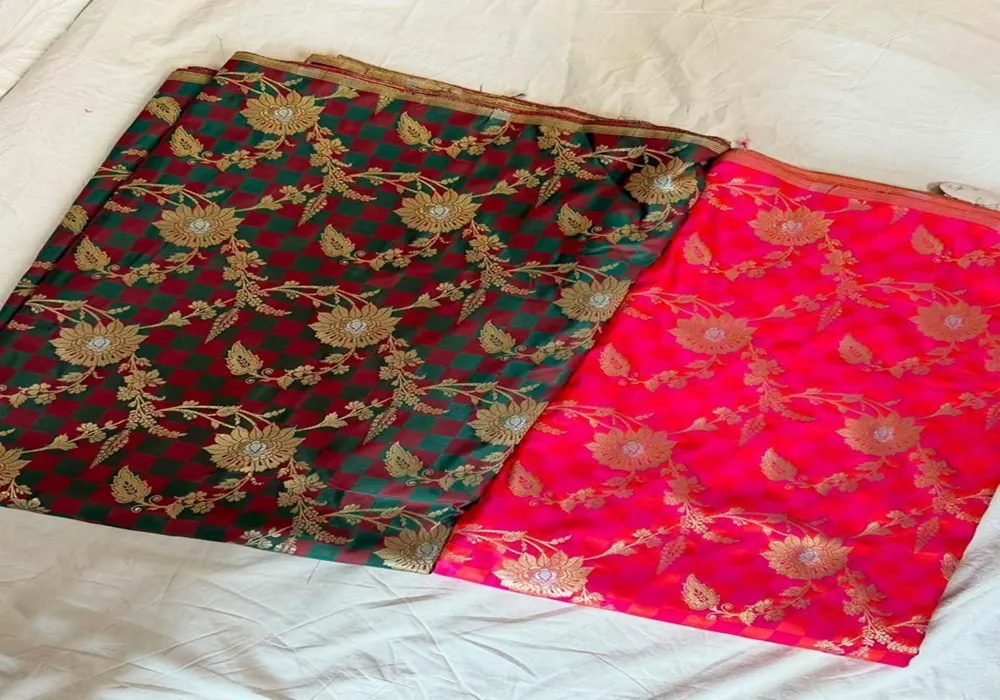
Zari is what gives Banarasi silk its unmistakable shimmer , but few buyers know the craft and history behind these metallic threads woven into brocade and Kimkhab fabric. Traditionally, zari was made from pure gold or silver, hammered into extremely thin wires and then wrapped around a silk core thread. This made fabrics like Kimkhab so valuable historically that they were reserved almost exclusively for royalty , a single garment could represent a meaningful quantity of precious metal. Today, “real zari” typically refers to silver wire that’s been electroplated with a thin layer of gold, offering the rich golden tone at a more accessible price point while retaining genuine metallic luster and weight. This differs significantly from “imitation zari” or “tested zari,” which uses copper or synthetic metallic-coated polyester threads that mimic the look but lack the durability, weight, and shine of metal-based zari. The difference matters practically, not just aesthetically. Real zari ages gracefully, developing a soft antique patina over decades rather than flaking or tarnishing cheaply. It also catches and reflects light with a depth that synthetic alternatives simply cannot replicate, which is why connoisseurs and serious buyers specifically ask about zari quality before purchasing brocade or Kimkhab fabric. Weaving with zari thread requires additional skill too , the metallic strands are less flexible than silk, demanding careful tension control to avoid breakage and ensure motifs sit cleanly within the weave. At Choubey Silk, we’re transparent about the zari quality in every fabric we offer, helping designers, retailers, and individual buyers understand exactly what they’re investing in , whether it’s a statement Kimkhab piece for a wedding lehenga or a refined brocade kurta fabric.