Shopping Cart

x 2

Light Blue Denim Dress
$24.99
x 3
$114.95
View Cart
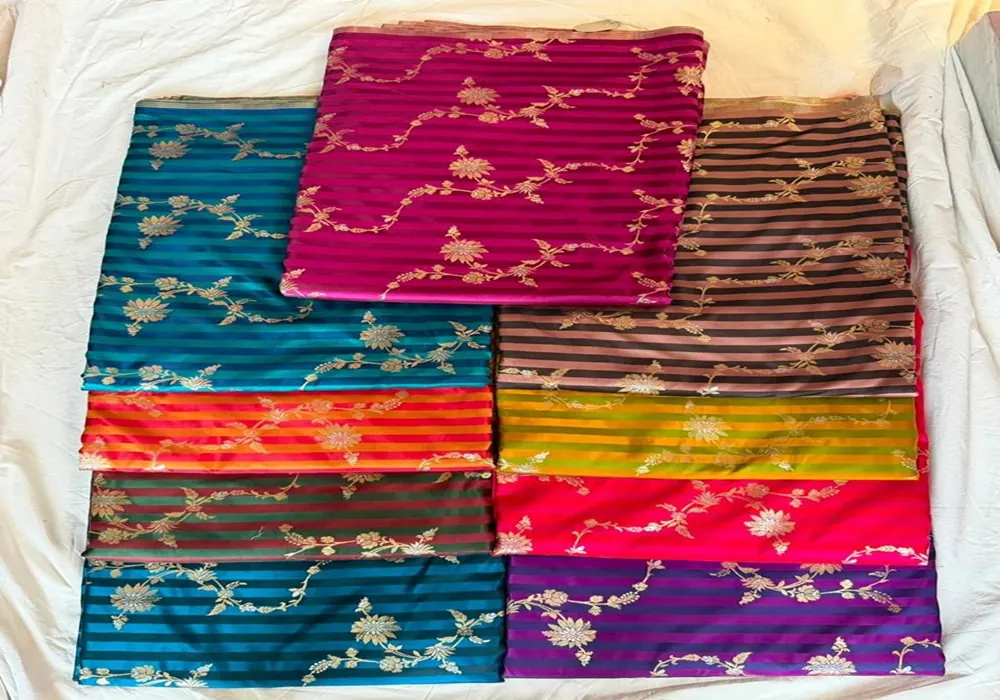
These three terms get used interchangeably by many buyers, but they actually describe distinct categories within the broader world of Banarasi woven silk, and understanding the differences helps when sourcing fabric for specific garments. Jacquard is, technically speaking, a weaving method rather than a fabric type , any textile woven on a Jacquard loom, where the pattern is built structurally into the weave rather than printed or embroidered on top, qualifies as jacquard fabric. This includes a huge range of designs, from subtle tonal patterns to elaborate motifs, and can be made from pure silk or silk blends. Brocade is a richer, more specific category , typically a jacquard-woven fabric featuring raised, ornamental patterns, often using supplementary weft threads (including zari) to create a slightly three-dimensional, embossed texture. Brocade tends to be heavier and more visually elaborate than standard jacquard, making it a favorite for sherwanis and statement garments. Kimkhab represents the most opulent end of this spectrum , a category of brocade where zari thread density is so high that it can almost entirely conceal the underlying silk base, creating an intensely rich, metallic-dominant fabric. Historically reserved for royal wear, Kimkhab today remains the choice for the most luxurious wedding garments and premium upholstery. In practical terms: jacquard offers versatility and a lighter feel suitable for everyday premium kurtas; brocade strikes a balance of richness and wearability ideal for sherwanis; Kimkhab is reserved for showstopper pieces where maximum opulence is the goal. At Choubey Silk, our catalog spans all three categories, and our team regularly helps designers and retailers match the right fabric category to their specific garment and budget requirements.