Men’s ethnic fashion has entered a new era. Traditional Indian silhouettes remain timeless, but the fabrics, colours, patterns and styling used to create them are becoming increasingly sophisticated. Today’s customer is looking beyond ordinary materials and standard designs. Whether shopping for a wedding sherwani, a festive kurta, an elegant bandhgala or a contemporary Indo-Western outfit, fabric has become one of the most important elements defining the final look.
At Choubey Silk, Varanasi, we believe exceptional men’s ethnic wear starts with exceptional fabric.
Located in a city internationally associated with Banarasi weaving and textile craftsmanship, Choubey Silk offers an extensive selection of premium men’s ethnic wear fabrics for designers, boutiques, retailers, wholesalers, garment manufacturers and international buyers.
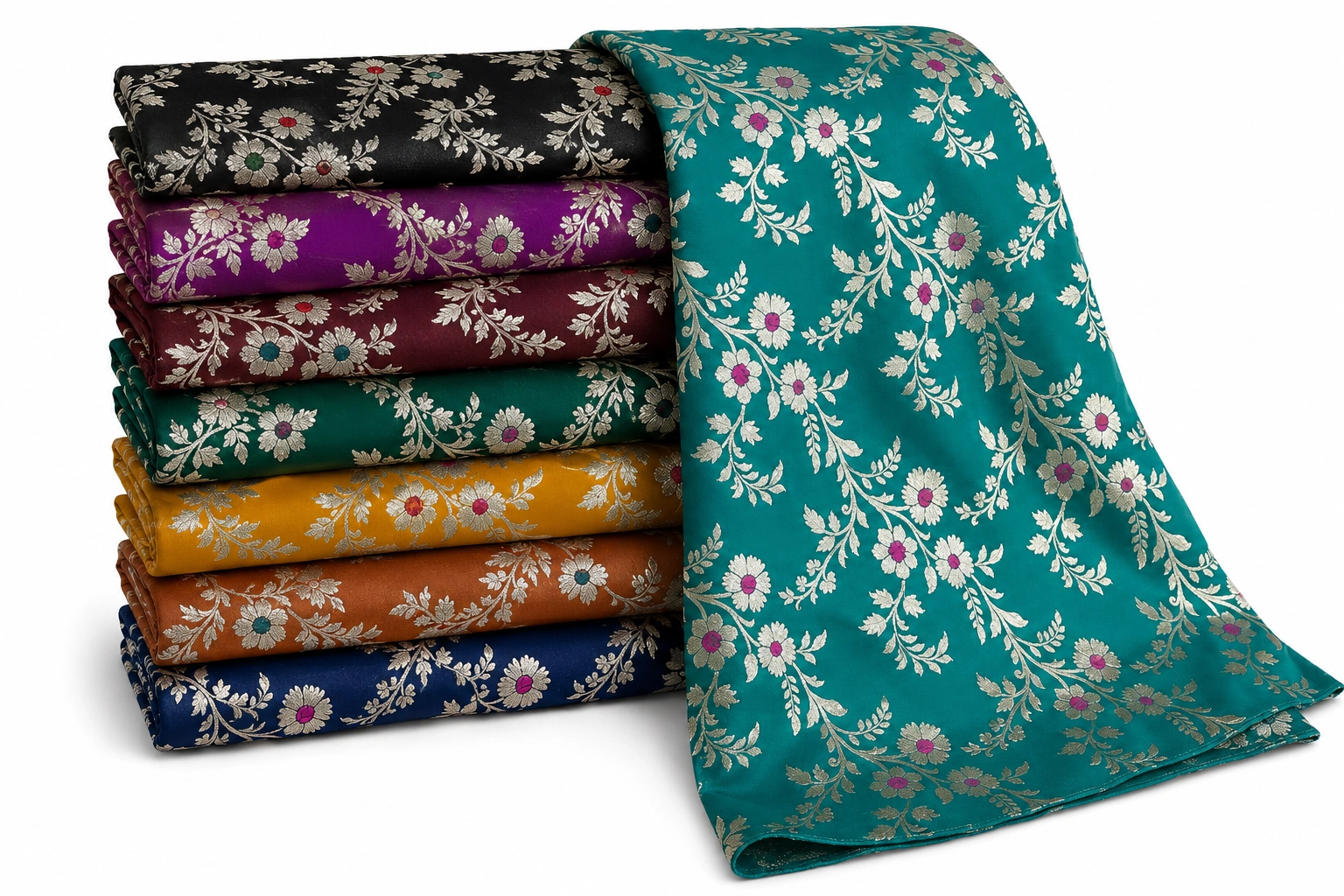
Our collections include Banarasi jacquard, brocade, Katan silk, Moonga, Chiniya, raw silk, satin-based fabrics and other premium woven textiles suitable for men’s kurtas, sherwanis, Indo-Western outfits, Nehru jackets, bandhgalas, groom wear and designer occasion wear.
From subtle self-patterns designed for understated kurtas to rich zari brocades created for luxurious wedding garments, men’s fabric offers almost unlimited possibilities.
This guide explores the world of premium men’s ethnic wear fabrics, how different materials can be used, what designers and retailers should consider when sourcing fabric, and why Varanasi remains an important destination for buyers looking for distinctive Indian textiles.
The Growing Importance of Fabric in Men’s Ethnic Fashion
For many years, conversations around men’s ethnic fashion focused primarily on the finished garment.
Today, customers are becoming increasingly aware of fabrics.
They notice texture.
They appreciate woven patterns.
They understand the difference between a plain surface and a richly constructed jacquard.
They pay attention to how zari interacts with light and how a textile drapes across a garment.
This shift has created new opportunities for designers and retailers.
A premium garment does not necessarily require excessive embroidery or surface decoration. When the fabric itself has enough character, the textile can become the central design element.
A Banarasi jacquard kurta, for example, can create sophistication through woven texture alone.
A brocade sherwani can communicate ceremonial luxury before additional embellishment is introduced.
A geometric jacquard jacket can create contemporary style without abandoning Indian textile heritage.
The fabric is no longer simply a material used to make the garment.
It becomes part of the garment’s identity.
Varanasi: The Heritage Behind Banarasi Men’s Fabrics
Varanasi, also known as Banaras or Kashi, occupies a special place in India’s textile tradition.
The city has developed a global reputation around Banarasi weaving, intricate textile construction and sophisticated design.
Traditional Banarasi fabrics are recognised for motifs inspired by flowers, foliage, Mughal art, architecture, geometry and nature.
But Banarasi weaving is not frozen in history.
Modern textile development has expanded the design language considerably.
Today, men’s Banarasi fabrics can feature:
- Geometric patterns
- Contemporary checks
- Woven stripes
- Small butis
- Tonal self-designs
- Minimal florals
- Abstract arrangements
- Antique metallic effects
- Modern meena combinations
- Traditional Mughal-inspired patterns
This balance between heritage and innovation makes Varanasi particularly relevant to modern men’s ethnic fashion.
For buyers searching for a men’s ethnic wear fabric supplier in Varanasi, sourcing within this textile ecosystem can provide access to an enormous variety of design directions.
Banarasi Jacquard: A Foundation of Premium Men’s Ethnic Wear
Banarasi jacquard is one of the most versatile categories for men’s ethnic fashion.
Jacquard designs are woven into the textile structure, creating a surface with depth and character.
Depending on the construction, a jacquard can be extremely subtle or highly decorative.
This flexibility makes it suitable for numerous garments.
Banarasi Jacquard for Kurtas
For men’s kurtas, jacquard can provide texture without requiring heavy embellishment.
Small motifs, self-patterns, stripes, checks and geometry can create refined festive garments.
Richer designs with zari can be used for weddings and ceremonial occasions.
Banarasi Jacquard for Sherwanis
Sherwanis can support more elaborate patterns.
Floral jaals, Mughal-inspired designs, geometric arrangements and metallic weaving can create the richness associated with groom wear.
Jacquard for Indo-Western Outfits
Contemporary geometric jacquards work particularly well for Indo-Western fashion.
The textile maintains an Indian woven identity while the pattern and garment silhouette can remain modern.
Jacquard for Jackets
Nehru jackets and wedding jackets are ideal applications for statement fabrics.
A richly woven jacket can be paired with a simpler kurta to create visual balance.
This versatility explains why Banarasi jacquard fabric for men’s ethnic wear has become such an important category.
Premium Fabrics for Men’s Kurtas
The kurta is perhaps the most adaptable garment in Indian menswear.
It can be minimal, traditional, festive, contemporary or luxurious.
The choice of fabric determines much of that character.
For understated kurtas, designers can use self-jacquards or small woven motifs.
For festive occasions, floral and geometric jacquards provide additional richness.
For weddings, zari-based fabrics and sophisticated Banarasi patterns can create greater visual impact.
Premium kurta fabric categories can include:
- Banarasi jacquard
- Katan silk
- Moonga
- Chiniya
- Raw silk
- Brocade
- Satin-based constructions
- Self-patterned woven fabrics
The correct choice depends on the occasion, silhouette, season and desired styling.
Katan Silk for Refined Men’s Ethnic Wear
Katan silk holds an important position in the Banarasi textile tradition.
Its refined silk character makes it suitable for premium garments where the material itself should communicate elegance.
Katan-based fabrics can be used across different design directions.
A relatively understated construction can create an elegant kurta.
A woven Katan fabric featuring richer motifs can be suitable for wedding and occasion wear.
The fabric can also be combined with jackets or other layers to create coordinated ethnic ensembles.
For customers looking for premium silk fabric for men’s ethnic wear, Katan represents an important category to explore.
Banarasi Brocade for Luxury Wedding Fashion
Brocade is one of the most visually distinctive woven fabric categories.
Its rich patterns and metallic effects have long made it relevant to ceremonial clothing.
In men’s fashion, Banarasi brocade can be used for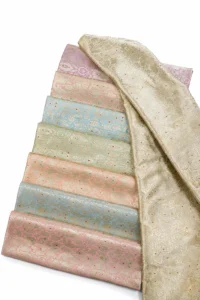
- Groom sherwanis
- Wedding jackets
- Nehru jackets
- Bandhgalas
- Indo-Western garments
- Designer kurtas
- Waistcoats
- Festive accessories
The pattern itself can become the centrepiece of the garment.
Traditional brocade may feature florals, vines, paisleys and heritage-inspired motifs.
Contemporary brocade can introduce cleaner geometry, unusual colours and restrained metallic detailing.
This ability to move between traditional and modern styling makes brocade particularly valuable to wedding-wear designers.
Premium Sherwani Fabrics for Groom Wear
The sherwani remains one of the most important garments in Indian wedding fashion.
For a groom, it is often the defining outfit of the wedding ceremony.
Fabric therefore needs to be selected carefully.
A premium sherwani fabric should complement the structured silhouette of the garment while providing appropriate visual richness.
Banarasi jacquards and brocades are particularly effective because woven patterns provide depth across the relatively large garment surface.
Traditional groom-wear fabrics may feature:
- Floral jaals
- Paisleys
- Mughal-inspired motifs
- Botanical patterns
- Elaborate butis
- Rich zari work
Contemporary groom wear can include:
- Geometric jacquards
- Minimal florals
- Tonal weaving
- Small repeated motifs
- Antique metallic effects
- Abstract patterns
For retailers searching for a sherwani fabric wholesaler in Varanasi, maintaining both traditional and contemporary options can help serve a wider customer base.
Indo-Western Fabrics for Contemporary Men
Indo-Western fashion represents one of the strongest examples of how Indian textiles continue to evolve.
The category combines Indian craftsmanship with modern garment construction.
An Indo-Western outfit may include an asymmetric jacket, structured bandhgala, layered kurta or contemporary long jacket.
The fabric can transform these silhouettes.
A traditional floral Banarasi jacquard can create an interesting contrast when used in a modern garment.
Alternatively, a geometric woven fabric can create a cleaner fusion aesthetic.
This makes Banarasi jacquard for Indo-Western wear especially relevant to younger customers looking for something different from conventional ethnic clothing.
Fabrics for Nehru Jackets
Nehru jackets provide an excellent opportunity to experiment with rich fabrics.
Because the jacket is generally worn over a simpler kurta, the textile can become the focal point of the outfit.
Designers can explore:
- Banarasi brocade
- Floral jacquard
- Geometric jacquard
- Self-patterns
- Checks
- Stripes
- Small butis
- Zari patterns
A well-designed jacket can transform even a simple kurta into a complete festive or wedding outfit.
For retailers, coordinated kurta-and-jacket fabric combinations can also create stronger merchandising possibilities.
Fabrics for Bandhgalas
The bandhgala occupies a sophisticated position within men’s formal and ethnic fashion.
Its structured silhouette works particularly well with woven fabrics.
For formal occasions, subtle tonal jacquards can create elegance.
For weddings, richer patterns and metallic detailing can provide additional impact.
Dark colours can produce a dramatic evening appearance, while pastels and neutrals can create a softer daytime look.
The pattern scale should complement the garment’s structured construction.
Small and medium motifs can be particularly versatile.
Geometric Fabrics for Modern Men’s Fashion
Geometry has become increasingly important in men’s ethnic wear.
Traditional floral motifs remain timeless, but contemporary customers often look for patterns that feel cleaner and more modern.
Geometric jacquards can include: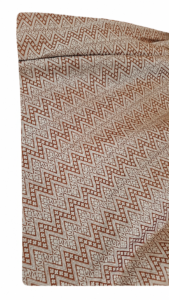
- Diamonds
- Squares
- Grids
- Interlocking shapes
- Linear patterns
- Abstract arrangements
- Architectural motifs
- Contemporary checks
When woven through jacquard techniques, these designs gain texture and depth.
This allows designers to create modern garments while retaining the premium character of woven fabric.
Geometric patterns are especially suitable for kurtas, jackets, bandhgalas and Indo-Western outfits.
Checks and Stripes in Premium Ethnic Fabrics
Checks and stripes are familiar patterns in menswear, but woven interpretations can give them a completely different identity.
Banarasi-inspired checks may incorporate tonal weaving, zari accents or subtle textural variation.
Stripes can range from minimal linear arrangements to more elaborate geometric compositions.
These designs can be particularly effective for customers who prefer contemporary styling over conventional floral patterns.
For designers, checks and stripes also provide opportunities to develop ethnic garments that feel more versatile.
Floral and Mughal-Inspired Fabrics
Traditional floral and Mughal-inspired patterns remain central to Banarasi design.
They are particularly important for wedding and ceremonial garments.
Floral motifs can range from extremely small butis to elaborate jaals covering the entire fabric.
The visual effect depends on scale, spacing, colour and metallic detailing.
A small floral pattern can create refined texture.
A larger Mughal-inspired motif can provide a more dramatic appearance.
These fabrics are especially suitable for sherwanis, wedding jackets and statement kurtas.
Shikargah-Inspired Design in Men’s Fabrics
Shikargah is another distinctive design direction associated with traditional textile vocabulary.
When interpreted carefully for men’s fashion, smaller heritage-inspired motifs can create sophisticated woven surfaces.
Contemporary versions can combine traditional imagery with modern colour palettes and geometric organisation.
This allows designers to reference textile heritage without creating a garment that feels dated.
For premium wedding collections, heritage-inspired motifs can also provide a strong storytelling element.
The Role of Zari in Men’s Ethnic Wear
Zari has long been associated with Indian ceremonial textiles.
In men’s fashion, however, the most effective use of zari often depends on balance.
Not every garment requires a heavily metallic surface.
Subtle zari can provide highlights that become visible as the wearer moves.
Moderate zari can add festive richness.
Dense metallic weaving can create a more ceremonial look appropriate for groom wear.
The zari tone also changes the character of the fabric.