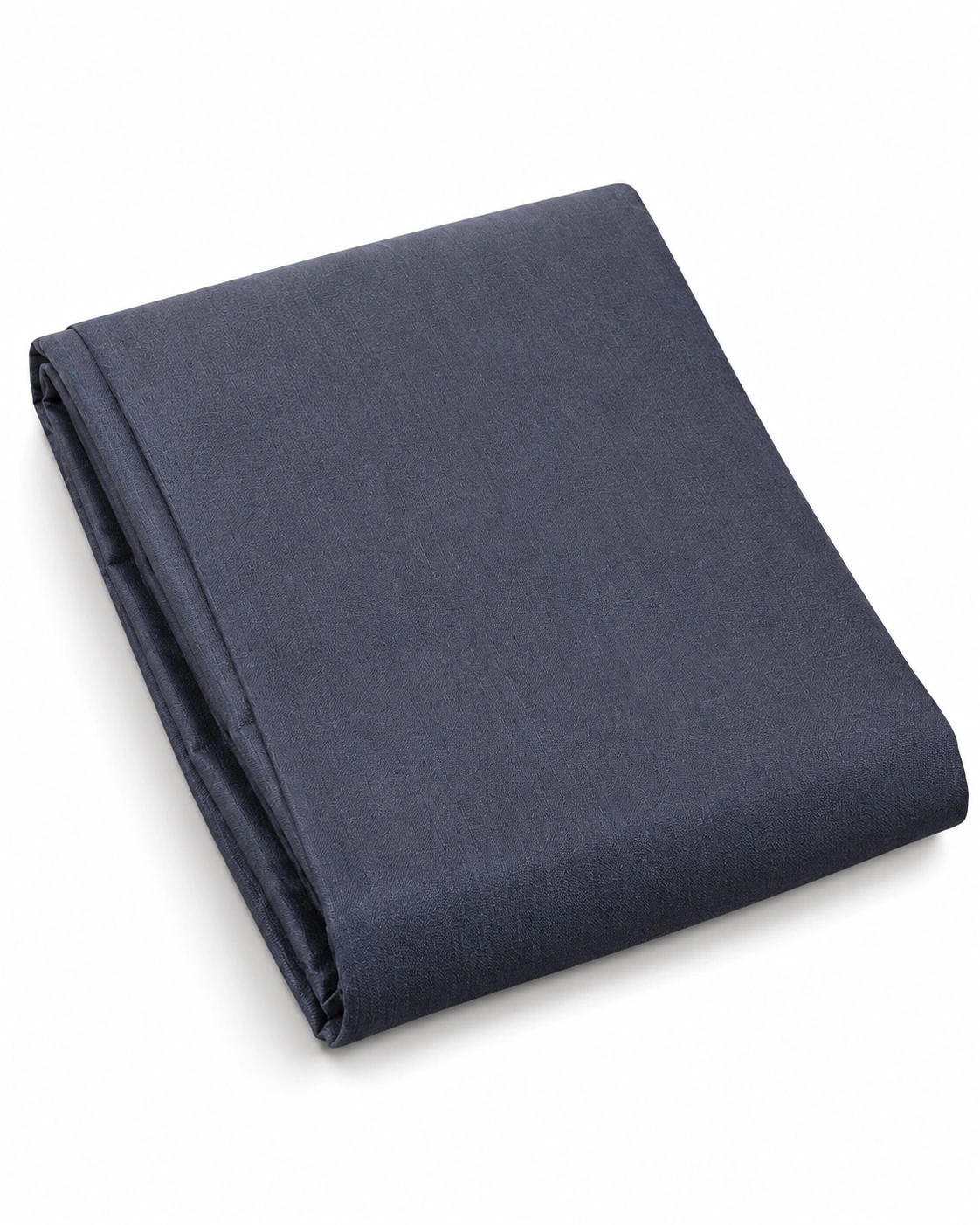
Rather than thinking of Banarasi as one single pattern or one single fabric, it is more useful to understand it as a rich textile vocabulary.
Different Banarasi fabrics can vary in: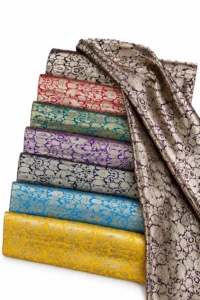
- Base material
- Yarn construction
- Weave
- Motif
- Pattern scale
- Zari usage
- Colour
- Texture
- Weight
- Drape
- Intended garment application
Some Banarasi fabrics are highly elaborate.
Others are remarkably subtle.
A rich brocade featuring metallic floral motifs and a tonal geometric jacquard may look completely different, yet both can reflect the broader design possibilities associated with Banarasi weaving.Few textile traditions represent the richness of Indian craftsmanship as beautifully as Banarasi weaving.
Born from the textile culture of Varanasi—also known as Banaras or Kashi—Banarasi weaving is admired for intricate patterns, sophisticated woven structures, zari detailing and a remarkable ability to transform threads into textiles with depth, texture and character.
For generations, the weaving tradition of Banaras has been associated with luxury Indian fabrics. Yet the importance of Banarasi weaving is not limited to history.
It continues to evolve.
Traditional floral motifs now exist alongside modern geometry. Heritage-inspired jaals share collections with contemporary checks and stripes. Rich brocades remain relevant to ceremonial clothing, while subtle self-jacquards are increasingly suitable for minimalist modern fashion.
This evolution is particularly significant in men’s ethnic and occasion wear.
Banarasi fabrics can today be used for men’s kurtas, sherwanis, Indo-Western outfits, Nehru jackets, bandhgalas, groom wear and designer wedding collections.
At Choubey Silk, Varanasi, our connection with this textile tradition is reflected in our focus on premium fabrics for modern men’s fashion.
Our collections include Banarasi jacquard, brocade, Katan silk and other premium woven textiles, alongside fabric categories such as Moonga, Chiniya, raw silk and satin-based constructions suitable for different garment applications.
To appreciate a Banarasi fabric, however, it is useful to understand what lies behind the finished textile.
The beauty is not only in the colour or motif.
It is in the relationship between yarn, weave, pattern, texture and craftsmanship.
This guide explores the art of Banarasi weaving, its design vocabulary, the role of jacquard and zari, the importance of Varanasi’s textile heritage and how Banarasi fabrics continue to find new expression in contemporary men’s fashion.
This diversity is one of the reasons the textile tradition has remained relevant across generations.
Varanasi: The Home of a Remarkable Textile Tradition
Varanasi is one of India’s oldest continuously inhabited cities and has long been recognised as an important cultural centre.
Alongside its religious, artistic and historical significance, the city developed a strong textile identity.
Over generations, weaving knowledge became part of a wider ecosystem involving artisans, textile traders, designers, yarn suppliers and fabric businesses.
This environment allowed textile ideas to develop, adapt and circulate.
The result is not simply one famous type of cloth.
It is a culture of textile experimentation.
Traditional design knowledge can be reinterpreted through new colours.
Historical motifs can be resized for modern garments.
Different yarn combinations can create different surface effects.
New market requirements can inspire contemporary patterns.
This interaction between tradition and adaptation is central to understanding why Banarasi fabrics from Varanasi continue to attract designers and buyers.
Why Banarasi Weaving Is So Distinctive
One of the defining characteristics of Banarasi textiles is the importance of the woven surface.
In many ordinary fabrics, the base textile is produced first and the visual design may be added later through printing or surface embellishment.
In woven patterned fabrics, design can become part of the textile construction itself.
This creates visual depth.
As light moves across the surface, different areas can reflect light differently.
The fabric may reveal details that are less visible from another angle.
Metallic yarns can create highlights.
Silk-like surfaces can provide lustre.
Textured areas can contrast with smoother sections.
This interaction gives woven fabric its distinctive character.
The Loom: Where Design Becomes Fabric
At the heart of weaving is the loom.
In its simplest form, weaving involves the interlacing of two sets of yarns.
The warp consists of yarns running lengthwise.
The weft travels across them.
By controlling how these yarns interact, different textile structures and patterns can be created.
For patterned textiles, this process becomes considerably more complex.
The design must be translated into a structure that can actually be woven.
Motifs need to be organised.
Repeats need to align.
Colour relationships need to be considered.
Additional decorative yarns may need to appear only in selected areas.
This is one reason woven textile design requires both artistic imagination and technical understanding.
A motif is not simply drawn onto the fabric.
It must become part of the fabric.
Understanding Warp and Weft
Warp and weft are fundamental to almost every woven textile.
The warp creates the longitudinal foundation of the cloth.
The weft moves across the width.
Different combinations of these yarns can influence:
- Strength
- Texture
- Density
- Surface appearance
- Drape
- Weight
- Lustre
In decorative weaving, additional yarn interactions can create motifs and effects beyond the basic ground structure.
Understanding this helps explain why two fabrics that appear similar in photographs may behave very differently in person.
The construction beneath the visible design matters.
From Design Concept to Woven Motif
Before a complex fabric can be woven, the design needs to be planned.
Traditional Banarasi design vocabulary has drawn inspiration from many sources, including nature, architecture and historical decorative arts.
Designs can incorporate:
- Flowers
- Leaves
- Vines
- Paisleys
- Butis
- Jaals
- Geometric arrangements
- Mughal-inspired forms
- Shikargah-inspired motifs
- Abstract compositions
The scale and arrangement of these elements can completely change the character of a fabric.
A small repeated buti may create subtle texture.
A large floral jaal can produce ceremonial richness.
A compact geometric pattern can feel contemporary.
Design planning therefore plays an essential role before weaving begins.
Butis: Small Motifs with Significant Impact
A buti is generally understood as a small individual motif repeated across the fabric.
Butis can be floral, geometric or inspired by other decorative forms.
In men’s fabrics, smaller motifs can be especially useful.
They can create texture without overwhelming the garment.
A small zari buti can add enough richness for a festive kurta.
A geometric buti can make a jacquard suitable for contemporary men’s wear.
A carefully spaced floral motif can work beautifully for a wedding jacket.
The scale and spacing are just as important as the motif itself.
Jaals: Creating a Rich Woven Surface
A jaal generally refers to a more continuous or interconnected pattern spread across the fabric.
Floral and botanical jaals can create significant visual richness.
Because the design covers more of the textile surface, jaals can be particularly effective for ceremonial garments.
In men’s fashion, they can be used selectively.
A rich jaal may work beautifully for a groom’s sherwani.
A more restrained interpretation can be used for a statement jacket.
The size and density should always be considered according to the garment.
Floral Motifs in Banarasi Weaving
Flowers and botanical forms are central to the visual language of many Banarasi textiles.
Floral motifs can range from tiny butis to elaborate interconnected arrangements.
Traditional florals can provide strong heritage character.
Contemporary designers can reinterpret them by changing:
- Scale
- Spacing
- Colour
- Zari tone
- Layout
- Background colour
A floral design in rich gold may appear ceremonial.
The same visual idea rendered tonally can feel understated.
A floral motif combined with pastel colours can create a contemporary wedding aesthetic.
This adaptability helps traditional design remain relevant.
Mughal-Inspired Design in Banarasi Textiles
Mughal decorative arts have influenced many areas of Indian design, including textiles.
Floral arrangements, vines, architectural forms and symmetrical compositions can all contribute to a Mughal-inspired aesthetic.
In Banarasi fabrics, these motifs can create a sense of grandeur and heritage.
For men’s fashion, Mughal-inspired patterns can work particularly well for:
- Sherwanis
- Wedding jackets
- Nehru jackets
- Ceremonial kurtas
- Groom wear
Contemporary versions can reduce the scale or simplify the arrangement to suit modern garments.
Shikargah-Inspired Motifs
Shikargah-inspired design represents another distinctive direction within Indian textile vocabulary.
These compositions can draw on scenes and motifs associated with nature and historical decorative storytelling.
For contemporary men’s fashion, smaller and more controlled interpretations can provide a distinctive alternative to conventional florals.
A heritage-inspired motif can also give a designer collection a stronger narrative identity.
The important consideration is how the motif is adapted to the scale and purpose of the garment.
The Role of Geometry in Banarasi Weaving
Banarasi design is not limited to florals and heritage motifs.
Geometry has become increasingly important, especially in men’s fashion.
Geometric designs can include:
- Diamonds
- Grids
- Interlocking shapes
- Linear patterns
- Repeated forms
- Abstract geometry
- Architectural arrangements
- Contemporary checks
These designs provide a bridge between traditional woven craftsmanship and modern menswear.
A geometric jacquard can feel distinctly contemporary while retaining the depth of woven fabric.
This makes geometry particularly suitable for kurtas, bandhgalas, Nehru jackets and Indo-Western garments.
Checks and Stripes: Traditional Weaving, Modern Visual Language
Checks and stripes are familiar patterns within global menswear.
When interpreted through woven techniques, they can acquire a very different character.
A tonal check can create subtle texture.
A metallic line can introduce festive detail.
A woven stripe can give movement and structure to a garment.
For men’s fashion designers, these patterns provide an opportunity to work with Banarasi weaving without relying entirely on traditional motifs.
They are particularly effective for customers who prefer clean, contemporary styling.
Understanding Banarasi Jacquard
Jacquard is extremely important to contemporary patterned textile production.
The term is associated with a mechanism that allows individual control of warp yarns, enabling complex woven patterns.
For the buyer, the most important point is that a jacquard pattern is created through weaving rather than simply being printed on top of the textile.
This creates depth and texture.
Banarasi jacquard can range from:
- Self-patterns
- Florals
- Geometry
- Checks
- Stripes
- Butis
- Heritage motifs
- Zari-rich designs
Because of this variety, Banarasi jacquard fabric can serve both traditional and contemporary fashion.
Self-Jacquard: The Art of Understated Texture
One of the most interesting developments in men’s fabrics is the growing appreciation for self-jacquard.
In these textiles, the pattern remains relatively close to the base colour.
Instead of strong visual contrast, theBanarasi weaving broadly refers to textile traditions associated with Varanasi and the surrounding weaving ecosystem.
The term is often connected with fabrics recognised for intricate woven designs and decorative techniques.
design relies on texture and light.
This creates a sophisticated effect.
From a distance, the fabric may appear simple.
As the wearer moves, the woven design becomes more visible.
This makes self-jacquard particularly suitable for:
- Men’s kurtas
- Bandhgalas
- Indo-Western outfits
- Nehru jackets
- Formal festive wear
It demonstrates that Banarasi-inspired luxury does not always need to be elaborate.
Banarasi Brocade: Richness Through Weaving
Brocade represents one of the richer expressions of decorative weaving.
Its patterns can include supplementary decorative yarns that create distinctive motifs across the textile.
Brocade is strongly associated with ceremonial and luxury clothing because of its visual richness.
For men’s fashion, Banarasi brocade can be used for:
- Groom sherwanis
- Wedding jackets
- Nehru jackets
- Bandhgalas
- Designer kurtas
- Indo-Western garments
Traditional brocade may feature elaborate florals and heritage motifs.
Modern brocade can incorporate geometry and more restrained metallic effects.
The fabric can therefore move between classic and contemporary styling.
Zari: Metallic Character in Banarasi Textiles
Zari is one of the most recognisable decorative elements associated with many Banarasi fabrics.
Its metallic appearance can add highlights, contrast and ceremonial richness.
However, zari does not need to dominate the textile.
Its use can range from subtle to elaborate.
Small zari motifs can create restrained festive fabrics.
Moderate metallic detailing can work beautifully for wedding jackets.
Dense zari can provide the grandeur required for ceremonial sherwanis.
The tone of the zari also influences the final appearance.
Bright gold can feel traditional.
Antique gold can create softer heritage character.
Copper can add warmth.
Muted metallic effects can complement contemporary geometry.
The Importance of Meena Colour
Meena detailing can introduce additional colour within woven motifs.
Small areas of colour can dramatically change the personality of a design.
For men’s fabrics, controlled meena accents can be particularly effective.
A geometric motif might combine antique gold with copper.
A floral design could introduce small touches of pista or baby pink.
The purpose is not always to make the fabric colourful.
A small accent can be enough to provide visual depth.
Katan Silk and the Banarasi Textile Tradition
Katan silk has an important association with Banarasi textiles.
Its refined silk character can provide an elegant foundation for woven designs.
Depending on the construction, Katan-based fabrics can appear relatively understated or richly decorative.
For men’s fashion, Katan can be explored for:
- Premium kurtas
- Sherwanis
- Wedding garments
- Jackets
- Indo-Western outfits
The natural character of the silk can become part of the garment’s luxury.
When evaluating Katan fabric, buyers should consider not only the name but the actual construction, texture, weight and intended use.
Why Texture Matters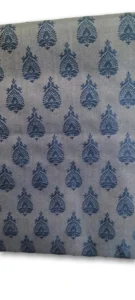
Texture is one of the characteristics that can be difficult to appreciate fully through a photograph.
A woven textile is designed to be experienced physically.
The surface may have slight variations.
Motifs may sit differently against the base weave.
Metallic elements may catch the light from particular angles.
Silk character may become more noticeable through movement.
This is why professional fabric selection should consider the textile as a physical material rather than only a visual pattern.
For designers, texture can become as important as colour.
The Relationship Between Weave and Light
Light plays an important role in the appearance of woven textiles.
Different yarns and weave structures can reflect light differently.
This is especially visible in fabrics with silk character or metallic detailing.
A motif may appear more prominent under direct light.
A self-jacquard may become visible only when viewed from a certain angle.
Zari can create highlights as the garment moves.
This dynamic quality is one reason woven textiles can appear particularly effective in wedding and evening environments.
The Importance of Motif Scale
Motif scale has a major influence on the final garment.
A design that looks beautiful on a fabric roll may not necessarily work equally well after cutting.
Small Motifs
Small repeated patterns are highly versatile.
They work particularly well for kurtas and structured jackets.
Medium Motifs
Medium designs create greater visual presence while remaining relatively adaptable.
Large Motifs
Large motifs can create dramatic garments but require careful planning.
For sherwanis, large patterns can be effective because the garment provides a larger surface.
For small jacket panels, designers may need to consider placement carefully.
Pattern Repeat and Garment Cutting
Woven patterns often repeat across the fabric.
This repeat becomes important during garment construction.
A designer or manufacturer needs to consider where motifs will fall after cutting.
This becomes especially important with:
- Large florals
- Geometric arrangements
- Stripes
- Checks
- Asymmetric garments
- Multi-panel jackets
Poor pattern placement can disrupt an otherwise beautiful design.
For commercial garment production, understanding repeat and fabric consumption is essential.
Why Fabric Width Matters
Width is another practical factor that should not be ignored.
It influences how efficiently garment pieces can be cut and how much fabric may be required.
Manufacturers purchasing commercial quantities should consider width alongside motif repeat, weight and garment structure.
The most visually attractive textile is not always the most efficient for every garment.
Professional sourcing balances design with production requirements.
Handcrafted Character and Natural Variation
Traditional and artisan-influenced textiles can display subtle variations that contribute to their character.
Rather than expecting every woven surface to resemble an artificially uniform digital print, buyers should appreciate the relationship between yarn, construction and the weaving process.
These details can contribute to the authenticity and individuality of the textile.
For luxury fashion, such surface character can become part of the material’s appeal.
Banarasi Weaving for Men’s Kurtas
Banarasi fabrics provide enormous possibilities for men’s kurtas.
A kurta can use:
- Self-jacquard
- Small butis
- Geometric patterns
- Florals
- Checks
- Stripes
- Zari accents
- Katan-based fabrics
The choice depends on the occasion.
For understated festive wear, tonal jacquard can work beautifully.
For weddings, richer motifs and metallic details can be introduced.
For contemporary fashion, geometry can create a modern identity.
Banarasi Fabrics for Sherwanis
The sherwani provides a larger canvas for woven design.
Rich brocades, floral jaals, Mughal-inspired motifs and zari jacquards can create ceremonial grandeur.
Modern sherwanis can also use smaller geometry and tonal patterns.
This demonstrates the versatility of Banarasi weaving.
The same textile tradition can support both a highly traditional groom and a customer seeking minimalist contemporary wedding wear.
Banarasi Weaving for Indo-Western Fashion
Indo-Western fashion has opened another important chapter for Banarasi textiles.
Traditional fabric no longer needs to be restricted to traditional silhouettes.
A geometric jacquard can become an asymmetric jacket.
A brocade can become a structured contemporary layer.
A self-jacquard can become a minimalist bandhgala.
A heritage floral can be used selectively on panels.
This freedom allows designers to reinterpret weaving traditions without losing their textile identity.
Banarasi Fabrics for Nehru Jackets
The Nehru jacket is particularly suitable for patterned fabrics.
Because it is usually paired with a simpler kurta, the jacket can carry stronger woven design.
Florals, geometry, brocade, checks and zari patterns can all work effectively.
This makes the Nehru jacket an accessible way for customers to incorporate Banarasi textiles into modern wardrobes.
Banarasi Fabrics for Bandhgalas
The structured bandhgala can showcase woven texture particularly well.
Tonal jacquards can create formal sophistication.
Geometric fabrics can produce a contemporary appearance.
Rich florals can make the garment suitable for weddings.
Dark fabrics with subtle metallic patterns can work particularly well for evening receptions.
Banarasi Weaving and Modern Groom Wear
Modern groom wear has become much more diverse.
A groom may wear several different garments across wedding functions.
This creates opportunities for multiple Banarasi textile directions.
A pastel jacquard can work for engagement.
A floral kurta fabric can suit mehendi.
A metallic geometric jacket can work for sangeet.
A rich brocade can become the wedding sherwani.
A dark self-jacquard can create a sophisticated reception bandhgala.
The weaving tradition remains the common thread while the garments change.
Banarasi Fabrics for Contemporary Designers
Fashion designers can use Banarasi textiles as a creative starting point rather than merely a decorative addition.
A motif can inspire a silhouette.
A colour combination can determine an entire collection.
A geometric weave can become the identity of a contemporary menswear range.
A heritage design can provide storytelling for a wedding collection.
This relationship between textile and garment design can produce clothing with greater depth and identity.
The Evolution of Banarasi Design
Tradition survives when it can adapt.
Banarasi weaving continues to be relevant because its design vocabulary is not static.
Contemporary developments can include:
- Smaller motifs
- Cleaner layouts
- Geometry
- Checks
- Stripes
- Tonal weaving
- Pastel colours
- Antique metallic effects
- Controlled meena
- Abstract patterns
These changes allow traditional weaving knowledge to communicate with new generations of customers.
Traditional Motifs, Contemporary Colours
One of the simplest ways to modernise a textile is through colour.
A heritage floral rendered in conventional colours may feel highly traditional.
The same motif woven against pastel pink, sage, powder blue or champagne can create an entirely different character.
Similarly, replacing bright metallic effects with antique gold or copper can soften the appearance.
This demonstrates how traditional motifs can evolve without losing their identity.
Modern Motifs, Traditional Craftsmanship
The opposite approach is equally interesting.
Instead of changing the colour of a traditional motif, designers can use entirely modern patterns while retaining woven construction.
Geometry, checks, stripes and abstract arrangements can all be interpreted through jacquard weaving.
The result can look contemporary while still benefiting from the depth and texture of woven fabric.
This is particularly important for men’s fashion.
Banarasi Fabrics for Fashion Retailers
Retailers sourcing Banarasi men’s fabrics should consider building a balanced collection.
Different customers have different preferences.
A strong assortment can include:
- Subtle self-jacquards
- Small butis
- Contemporary geometry
- Traditional florals
- Brocades
- Pastel fabrics
- Dark evening fabrics
- Checks and stripes
- Zari designs
- Katan silk
This allows the retailer to serve festive, wedding and contemporary fashion requirements.
Wholesale Banarasi Fabrics for Garment Manufacturers
Wholesale sourcing involves practical considerations beyond appearance.
Manufacturers should evaluate:
- Fabric category
- Width
- Weight
- Drape
- Motif scale
- Design repeat
- Colour
- Intended garment
- Quantity
- Production schedule
- Repeat requirements
A textile that works beautifully for one garment may not be appropriate for another.
Clear communication between buyer and supplier can make the sourcing process more efficient.
Banarasi Fabrics for International Buyers
Banarasi textiles are relevant not only to the Indian market.
Designers, boutiques, retailers and garment manufacturers serving customers in the United States, United Kingdom, UAE, Canada, Australia, Europe and the Middle East may source Indian fabrics for wedding and ethnic collections.
Different markets may prefer different design directions.
Some buyers may focus on traditional brocade.
Others may prefer contemporary geometric jacquards.
Wedding specialists may require a combination of both.
For international sourcing, clearly communicating the garment application, quantity, design preference and destination can help streamline selection.
How to Appreciate a Banarasi Fabric
When examining a Banarasi fabric, look beyond the first impression.
Consider:
The weave:
How does the surface change under light?
The motif:
Is it floral, geometric, heritage-inspired or contemporary?
The scale:
Will the pattern suit the intended garment?
The colour:
Does the base colour complement the woven design?
The metallic character:
Is the zari subtle, antique, bright or dominant?
The texture:
How does the fabric feel and behave?
The drape:
Will it support the intended silhouette?
The construction:
Is it appropriate for the garment being planned?
This approach is particularly useful for designers and professional buyers.
How to Choose Banarasi Fabric for Men’s Wear
The intended garment should always guide the selection.
For a kurta, consider comfort, drape and motif scale.
For a sherwani, structure and pattern placement become especially important.
For an Indo-Western jacket, think about how the fabric will interact with seams and panels.
For a Nehru jacket, stronger patterns can often be used effectively.
For a bandhgala, tonal texture and structured fabrics can create sophistication.
There is no single Banarasi fabric that is ideal for every application.
Choubey Silk and the Continuing Story of Banarasi Fabrics
At Choubey Silk, Varanasi, our focus is on connecting the textile heritage of Banaras with the evolving requirements of modern men’s fashion.
Our collections are suitable for:
- Men’s kurtas
- Sherwanis
- Indo-Western outfits
- Nehru jackets
- Bandhgalas
- Groom wear
- Wedding jackets
- Designer menswear
Our fabric range includes Banarasi jacquard, brocade, Katan silk, Moonga, Chiniya, raw silk, satin-based fabrics and other premium woven textiles.
We cater to individual customers as well as designers, boutiques, retailers, wholesalers, garment manufacturers and international textile buyers.
How Professional Buyers Can Enquire for Banarasi Fabrics
The sourcing process becomes easier when requirements are specific.
Instead of requesting only “Banarasi fabric,” buyers can explain the intended application.
For example:
“I need geometric Banarasi jacquard for men’s Indo-Western jackets.”
“I am looking for subtle self-jacquard for premium kurtas.”
“I require rich Banarasi brocade for groom sherwanis.”
“I need pastel jacquard for a men’s wedding collection.”
“I require wholesale Banarasi men’s fabrics for garment manufacturing.”
Useful information can include: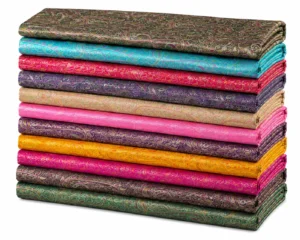
- Garment type
- Fabric category
- Design preference
- Colour
- Quantity
- Destination
- Required timeframe