
Men’s Indian fashion in 2026 is becoming increasingly defined by one highly versatile garment category: the ethnic jacket.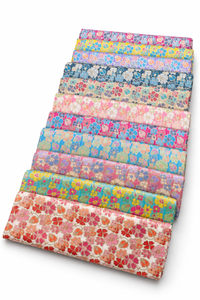
For decades, the kurta and sherwani dominated conversations around men’s festive and wedding fashion. Both remain essential, but the modern Indian wardrobe has expanded. Men are increasingly using jackets, bandhgalas, Nehru jackets and Indo-Western layers to create outfits that can move between traditional, contemporary and formal dressing.
A relatively simple kurta can be transformed by a Banarasi jacquard jacket.
A structured bandhgala can replace a conventional sherwani for an engagement or reception.
A long brocade jacket can become the statement piece of a groom’s sangeet outfit.
A geometric woven jacket can introduce Banarasi textile character into contemporary men’s fashion.
This makes the jacket more than an accessory.
In many outfits, the jacket is becoming the hero garment.
For Choubey Silk, this evolution is particularly relevant because ethnic jackets create an ideal canvas for premium woven fabrics.
At Choubey Silk, Varanasi, our focus is on premium fabrics for men’s ethnic, wedding and occasion wear. Our collections include Banarasi jacquard, brocade, Katan silk, Moonga, Chiniya, raw silk, satin-based fabrics and other premium woven textiles that can be explored for Nehru jackets, bandhgalas, Indo-Western jackets, wedding jackets, kurtas, sherwanis and groom wear.
This guide explores the men’s ethnic jacket styles shaping Indian fashion in 2026, how different fabrics influence each look, and how men, designers, boutiques and garment manufacturers can approach this evolving category.
Why Men’s Ethnic Jackets Matter in 2026
The rise of ethnic jackets reflects a broader change in men’s Indian fashion.
Modern customers want flexibility.
A wedding wardrobe may need separate outfits for:
- Engagement
- Mehendi
- Haldi
- Sangeet
- Wedding
- Reception
Buying a full sherwani for every function is neither necessary nor practical.
A jacket creates another possibility.
The same kurta can be styled differently by changing the outer layer.
A simple ivory kurta can look traditional with one jacket, contemporary with another and formal with a bandhgala.
This makes jackets valuable from both a fashion and wardrobe perspective.
The Jacket Is Becoming the Statement Piece
Traditionally, the kurta or sherwani often carried most of the decorative work.
In contemporary styling, that relationship can be reversed.
Consider:
Minimal Kurta + Statement Banarasi Jacket
Instead of decorating every element, the designer concentrates pattern, colour and woven richness in one garment.
This creates a clearer visual hierarchy.
The jacket becomes the hero.
The kurta and trousers support it.
For premium fabrics, this is particularly effective because a smaller garment can often support stronger woven designs without making the complete outfit feel excessively heavy.
Why Banarasi Fabrics Work for Men’s Jackets
Banarasi textiles offer a broad visual vocabulary.
They can include:
- Self-patterns
- Florals
- Butis
- Jaals
- Geometry
- Checks
- Stripes
- Mughal-inspired designs
- Zari detailing
- Contemporary abstract patterns
This makes them suitable for multiple jacket identities.
A floral brocade can create heritage luxury.
A geometric jacquard can feel contemporary.
A self-jacquard can create minimal formalwear.
A check can connect naturally with classic menswear.
The same broad textile tradition can therefore support very different fashion directions.
Trend 1: The Modern Nehru Jacket
The Nehru jacket remains one of the most versatile pieces in men’s Indian fashion.
Its relatively short, structured silhouette works naturally over kurtas.
In 2026, the Nehru jacket can move far beyond plain solid fabrics.
Designers can explore: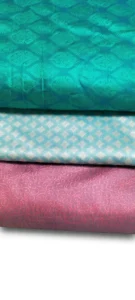
- Banarasi jacquard
- Brocade
- Geometric patterns
- Small florals
- Checks
- Stripes
- Self-jacquard
- Zari designs
How to Wear It
If the jacket has a strong pattern, keep the kurta relatively restrained.
For example:
Ivory Kurta + Geometric Banarasi Nehru Jacket
Cream Kurta + Floral Brocade Jacket
Pastel Kurta + Tonal Jacquard Jacket
Navy Kurta + Dark Self-Jacquard Jacket
Pair with straight or tapered trousers for a cleaner contemporary appearance.
Trend 2: The Banarasi Jacquard Jacket
Banarasi jacquard is particularly relevant to modern men’s jackets because woven pattern creates visual depth without depending entirely on embroidery.
Jacquard can be:
- Minimal
- Traditional
- Geometric
- Floral
- Metallic
- Tonal
This makes it highly adaptable.
For a Contemporary Look
Choose geometry or abstract patterns.
For a Traditional Look
Choose florals or butis.
For Minimal Luxury
Choose self-jacquard.
For Wedding Wear
Introduce antique gold, zari or controlled meena.
A Banarasi jacquard jacket can therefore serve many different customers.
Trend 3: The Geometric Ethnic Jacket
Geometry is one of the strongest directions for modern men’s ethnic outerwear.
Possible patterns include:
- Diamonds
- Grids
- Interlocking shapes
- Linear forms
- Architectural repeats
- Abstract geometry
These designs work especially well with structured jackets because the pattern reinforces the garment’s clean construction.
Best Colours
Consider:
- Ivory with antique gold
- Champagne with copper
- Beige tonal geometry
- Pista with subtle metallic detail
- Navy with antique gold
- Wine with tonal geometry
Best Occasions
- Engagement
- Sangeet
- Wedding guest dressing
- Reception
- Contemporary groom wear
Trend 4: The Brocade Statement Jacket
Brocade is naturally suited to statement dressing.
Instead of using rich brocade across an entire outfit, designers can concentrate it in the jacket.
This creates balance.
A brocade jacket can be worn over:
- Plain kurta
- Self-textured kurta
- Minimal silk kurta
- Tonal inner layer
Brocade Design Directions
Consider:
- Floral jaals
- Paisleys
- Botanical motifs
- Mughal-inspired patterns
- Small butis
- Contemporary woven designs
The richness should be selected according to the event.
Trend 5: The Contemporary Bandhgala
The bandhgala occupies an interesting position between Indian ethnic wear and formal tailoring.
This makes it one of the most important garments in Indo-Western menswear.
In 2026, the bandhgala can be:
- Minimal
- Tonal
- Geometric
- Textured
- Floral
- Metallic
The fabric largely determines the final identity.
A navy self-jacquard bandhgala can look understated.
An ivory geometric bandhgala can feel modern and wedding-oriented.
A floral brocade bandhgala can create ceremonial richness.
Trend 6: The Tonal Bandhgala
Tonal dressing works particularly well with structured jackets.
Instead of strong colour contrast, the fabric relies on weave and texture.
Consider:
Navy Bandhgala + Dark Navy Trousers
Ivory Bandhgala + Cream Trousers
Champagne Jacket + Beige Trousers
The result can feel clean and sophisticated.
Self-jacquard is particularly useful because it provides pattern without breaking the tonal colour story.
Trend 7: The Long Indo-Western Jacket
The long jacket provides a larger canvas for textile design.
It can be worn over:
- Kurta
- Shorter tunic
- Minimal inner layer
- Coordinated ethnic garment
Because the surface is larger, pattern scale becomes especially important.
Small Patterns
Create consistency and flexibility.
Medium Patterns
Provide stronger visual presence.
Large Patterns
Can create dramatic statement garments but require careful placement.
For long jackets, designers should study pattern repeat before cutting.
Trend 8: The Asymmetric Jacket
Asymmetry has become an important tool in contemporary fusion fashion.
A jacket may use:
- Diagonal closure
- Uneven hem
- Overlapping front
- Offset buttons
- Layered panels
These features can make even a relatively traditional textile look contemporary.
Geometric jacquard works particularly well because the structured pattern interacts with the asymmetric construction.
However, directional motifs require careful planning.
Trend 9: The Short Contemporary Ethnic Jacket
Not every ethnic jacket needs to follow the traditional Nehru-jacket proportion.
Shorter jackets can create a more youthful silhouette.
They can be paired with:
- Longer kurtas
- Contemporary trousers
- Minimal inner garments
Smaller jacquard repeats generally work particularly well because there is less surface area available.
Possible fabrics include:
- Geometry
- Checks
- Stripes
- Small butis
- Self-jacquard
Trend 10: The Minimal Self-Jacquard Jacket
Minimal luxury is one of the strongest directions in contemporary menswear.
A self-jacquard jacket can appear relatively simple from a distance.
Up close, the woven design becomes visible.
This works particularly well in:
- Ivory
- Cream
- Champagne
- Beige
- Pastels
- Navy
- Wine
For men who prefer sophisticated clothing without strong decoration, this can be an excellent direction.
Trend 11: Checks Reimagined Through Banarasi Jacquard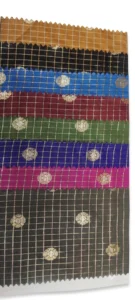
Checks already belong naturally to men’s wardrobes.
Using woven jacquard to reinterpret them creates an interesting fusion.
Possible designs include:
- Tonal grids
- Metallic checks
- Multi-scale checks
- Textured intersections
- Geometric grids
These designs can make an ethnic jacket feel familiar yet distinctive.
Checks work particularly well for:
- Nehru jackets
- Bandhgalas
- Short jackets
- Contemporary wedding layers
Trend 12: Striped Ethnic Jackets
Stripes can create another contemporary direction.
Possible interpretations include:
- Tonal stripes
- Metallic lines
- Alternating woven textures
- Vertical geometric bands
- Stripes combined with small motifs
Vertical patterns can visually emphasise length.
This can be particularly effective in longer jackets.
Trend 13: Floral Jackets for Modern Men
Florals are not disappearing from men’s wedding fashion.
They are becoming more varied.
Instead of only large traditional flowers, designers can explore:
- Small floral butis
- Tonal botanicals
- Stylised flowers
- Mughal-inspired florals
- Floral geometry
- Antique-gold floral patterns
The colour and scale determine whether the garment feels traditional or contemporary.
Trend 14: Mughal-Inspired Jacket Fabrics
Mughal-inspired textile design continues to offer rich possibilities for wedding wear.
Botanical forms, vines, florals and structured ornamental patterns can create elegant jacket fabrics.
The modern approach is often about editing.
Instead of covering the textile with maximum visual information, designers can reduce scale, increase spacing or use softer metallic tones.
This allows heritage design to work with contemporary tailoring.
Trend 15: Antique Gold Jacket Fabrics
Gold remains important in wedding fashion.
But antique gold can provide a softer alternative to extremely bright metallics.
It works particularly well with:
- Ivory
- Cream
- Champagne
- Beige
- Baby pink
- Pista
- Navy
- Wine
Antique-gold geometry can create contemporary wedding wear.
Antique-gold florals can create heritage luxury.
Small metallic butis can create understated festive jackets.
Trend 16: Copper in Men’s Ethnic Jackets
Copper provides a warmer metallic direction.
It can work effectively with:
- Geometric patterns
- Checks
- Abstract motifs
- Florals
- Small butis
Copper can also be combined with antique gold.
For designers looking for alternatives to conventional wedding metallics, this creates another useful direction.
Trend 17: Meena Accents in Men’s Jacket Fabrics
Meena can introduce controlled colour within woven motifs.
For men’s jackets, small accents can be particularly effective.
Consider:
- Baby pink
- Pista
- Blue
- Copper
- Other complementary colours
An ivory-and-gold jacket with subtle pink meena, for example, can coordinate with a broader wedding palette without making the entire garment pink.
Trend 18: Ivory Wedding Jackets
Ivory remains one of the most versatile colours in men’s wedding fashion.
The key is to use texture.
An ivory jacket can feature:
- Self-jacquard
- Gold butis
- Antique-gold geometry
- Tonal florals
- Small meena details
This gives the neutral base visual depth.
Ivory jackets can work particularly well for engagements, daytime weddings and groom styling.
Trend 19: Champagne and Beige Jackets
Champagne and beige offer warm neutral alternatives.
These colours work beautifully with:
- Antique gold
- Copper
- Tonal geometry
- Self-patterns
- Small florals
A champagne geometric jacket can create an elegant engagement look.
A beige self-jacquard bandhgala can provide understated formalwear.
Trend 20: Pastel Ethnic Jackets
Pastels continue to be relevant for daytime wedding fashion.
Consider:
- Baby pink
- Pista
- Sage
- Powder blue
- Lavender
- Peach
Pastel jacquards are particularly effective because woven texture gives depth to soft colours.
These fabrics can work well for:
- Mehendi
- Engagement
- Destination wedding
- Day wedding
- Festive events
Trend 21: Dark Jackets for Evening Events
Evening occasions create opportunities for darker fabrics.
Consider:
- Navy
- Wine
- Maroon
- Deep jewel tones
- Dark neutrals
Dark jacquard can look particularly effective under artificial lighting.
Metallic motifs become more visible.
Tonal patterns create depth.
These fabrics can work especially well for bandhgalas and reception jackets.
Trend 22: The Kurta-and-Jacket Monochrome Look
One of the cleanest ways to style an ethnic jacket is to use a monochromatic or tonal palette.
For example:
Ivory Kurta + Ivory Jacquard Jacket + Cream Trousers
Champagne Kurta + Beige Jacket + Tonal Trousers
Navy Kurta + Navy Bandhgala + Dark Trousers
The variation comes from texture rather than strong colour contrast.
This can create a sophisticated formal appearance.
Trend 23: Plain Kurta + Statement Jacket
This remains one of the most reliable styling formulas.
When the jacket has strong Banarasi jacquard or brocade, keep the kurta clean.
This gives the woven textile enough visual space.
For example:
Plain Ivory Kurta + Floral Brocade Jacket
Cream Kurta + Geometric Jacquard Jacket
Pastel Kurta + Antique-Gold Banarasi Jacket
The formula is simple, but fabric selection can make it highly distinctive.
Trend 24: Textured Kurta + Minimal Jacket
The reverse approach can also work.
If the kurta already uses jacquard or woven texture, choose a more restrained jacket.
This prevents the two garments from competing.
The jacket can repeat one colour from the kurta or remain within the same tonal family.
Trend 25: Jacket-Based Groom Wardrobes
A modern groom may need several outfits across the wedding.
Jackets make it possible to create variety without repeating the same sherwani silhouette.
Engagement
Champagne geometric jacket.
Mehendi
Pastel Nehru jacket.
Sangeet
Navy metallic bandhgala.
Wedding-Related Function
Ivory brocade long jacket.
Reception
Wine or dark tonal bandhgala.
Each event can have a distinct identity.
Men’s Ethnic Jackets for Engagements
Engagements usually allow a balance between formal and contemporary dressing.
Suitable directions include:
- Champagne jacquard
- Ivory geometry
- Beige self-pattern
- Pastel Nehru jacket
- Antique-gold detailing
Pair with a relatively simple kurta or tonal trousers.
Men’s Ethnic Jackets for Mehendi
Mehendi events often support fresh colour.
Consider:
- Pista
- Sage
- Pink
- Peach
- Powder blue
Small florals, butis and contemporary geometry can work beautifully.
Men’s Ethnic Jackets for Sangeet
The sangeet is an ideal event for stronger evening outerwear.
Consider:
- Navy
- Wine
- Dark jacquard
- Metallic geometry
- Brocade
- Structured bandhgala
Artificial lighting can make woven metallic details especially effective.
Men’s Ethnic Jackets for Wedding Guests
Wedding guests can use jackets to create festive dressing without adopting full groom-level ceremonial richness.
Good options include:
- Small buti jackets
- Pastel jacquard
- Geometric Nehru jackets
- Tonal bandhgalas
- Subtle brocade
The complete outfit should remain balanced.
Men’s Ethnic Jackets for Grooms
For the groom, the jacket can become more elaborate.
Possible directions include:
- Rich Banarasi brocade
- Premium geometric jacquard
- Antique-gold woven fabrics
- Long wedding jackets
- Contemporary bandhgalas
The right choice depends on the wedding function and the groom’s personal style.
Men’s Ethnic Jackets for Receptions
Reception dressing often moves closer to contemporary formalwear.
This makes the bandhgala particularly relevant.
Consider:
- Navy self-jacquard
- Wine geometric jacquard
- Dark tonal patterns
- Minimal metallic details
Pair with clean trousers for a sharper evening silhouette.
Ethnic Jackets for Destination Weddings
Destination weddings often involve outdoor settings and daytime functions.
This can favour:
- Pastels
- Champagne
- Ivory
- Smaller motifs
- Cleaner patterns
- Controlled layering
Climate should also influence fabric selection.
The most beautiful jacket will not feel successful if the wearer is uncomfortable throughout the event.
Choosing the Right Fabric for a Men’s Ethnic Jacket
Start with the garment.
Ask:
Is it a Nehru jacket?
Bandhgala?
Long jacket?
Short jacket?
Asymmetric jacket?
The intended silhouette should influence fabric selection.
Fabric Weight
Weight affects both comfort and structure.
A fabric that works for a short jacket may behave differently across a long garment.
Layering also matters.
Remember that the jacket will usually be worn over another garment.
Fabric Structure
A structured bandhgala requires a different relationship with fabric from a softer outer layer.
Discuss the textile with the designer or tailor before cutting.
Interlining and garment construction also influence the final result.
Fabric Drape
Some jackets require a crisp silhouette.
Others need more movement.
The textile should support the design.
Do not select fabric only because it looks attractive when folded.
Consider how it behaves when worn.
Motif Scale
Motif scale is especially important for jackets because the garment surface is often divided by:
- Front opening
- Collar
- Pockets
- Armholes
- Side seams
Small motifs provide greater flexibility.
Large motifs can create stronger impact but require careful placement.
Pattern Repeat
Pattern repeat affects cutting.
This is especially important for:
- Checks
- Stripes
- Large florals
- Directional motifs
- Geometry
Commercial manufacturers should consider repeat before estimating fabric consumption.
Fabric Width
Width can affect how efficiently jacket panels are cut.
For commercial production, buyers should consider:
- Usable width
- Size range
- Jacket length
- Pattern repeat
- Pattern matching
- Direction
These factors can influence total fabric requirement.
How to Fit a Nehru Jacket
A Nehru jacket should generally sit cleanly at:
- Shoulder
- Chest
- Armhole
- Collar
There should be enough room for the kurta underneath.
If the jacket is too tight, the inner garment may bunch.
If it is too loose, the silhouette may lose structure.
How to Fit a Bandhgala
Because the bandhgala is more structured, fit becomes even more important.
Pay particular attention to:
- Shoulder line
- Chest
- Waist
- Collar
- Sleeve
- Jacket length
The garment should follow the body without restricting movement.
Jacket Length and Body Proportion
Length can significantly change how the wearer appears.
Short jackets can visually lengthen the lower body.
Long jackets can create a more dramatic silhouette.
The correct proportion depends on:
- Height
- Torso length
- Kurta length
- Trouser shape
- Footwear