Shopping Cart

x 2

Light Blue Denim Dress
$24.99
x 3
$114.95
View Cart

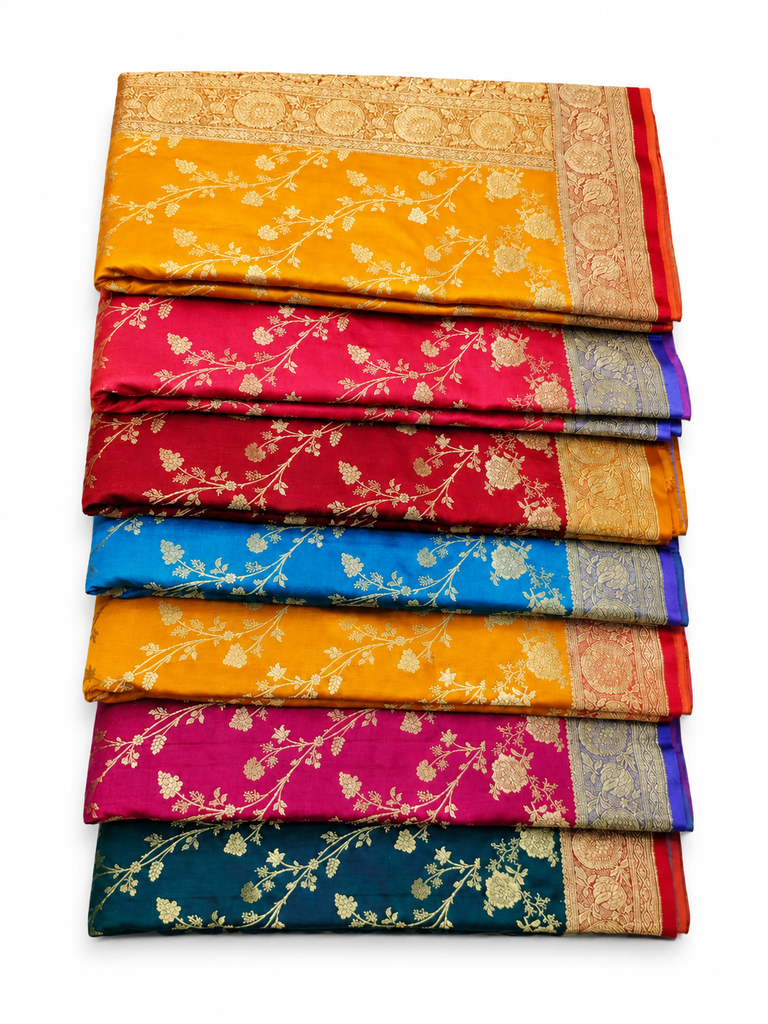
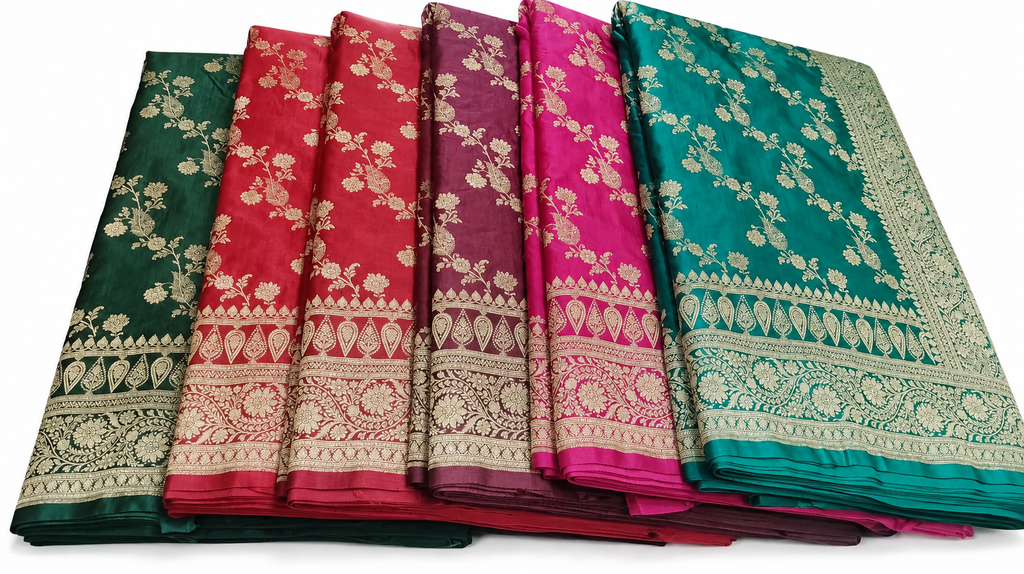
Banarasi textiles are useful far beyond the traditional saree. Designers and fashion brands use richly woven fabrics
for dupattas, lehengas, blouses, jackets, occasionwear and accessories. Selecting fabric for these applications
requires attention to weight, width, drape, pattern scale and the way the textile will be cut and constructed.
What makes Banarasi fabric useful for designers?
Pattern richness and decorative surfaces make Banarasi fabrics useful for occasionwear and statement pieces.
Designers can select smaller motifs for blouses or accessories and larger layouts for lehengas or panels.
Choose by application
Consider width, weight, drape, repeat size, border placement and whether the design needs to be matched across
panels.
Fabric for lehengas and dupattas
A coordinated fabric set can create a stronger collection. Dupattas may need a different weight or border treatment
from the main garment.
Buying samples
Designers should request samples before placing larger orders, especially when colour, texture and pattern scale
are critical.
Product information for fashion brands
A supplier should make composition, dimensions, weaving method where verified, care and availability easy to
understand. This reduces mistakes when the fabric moves into production.