Shopping Cart

x 2

Light Blue Denim Dress
$24.99
x 3
$114.95
View Cart
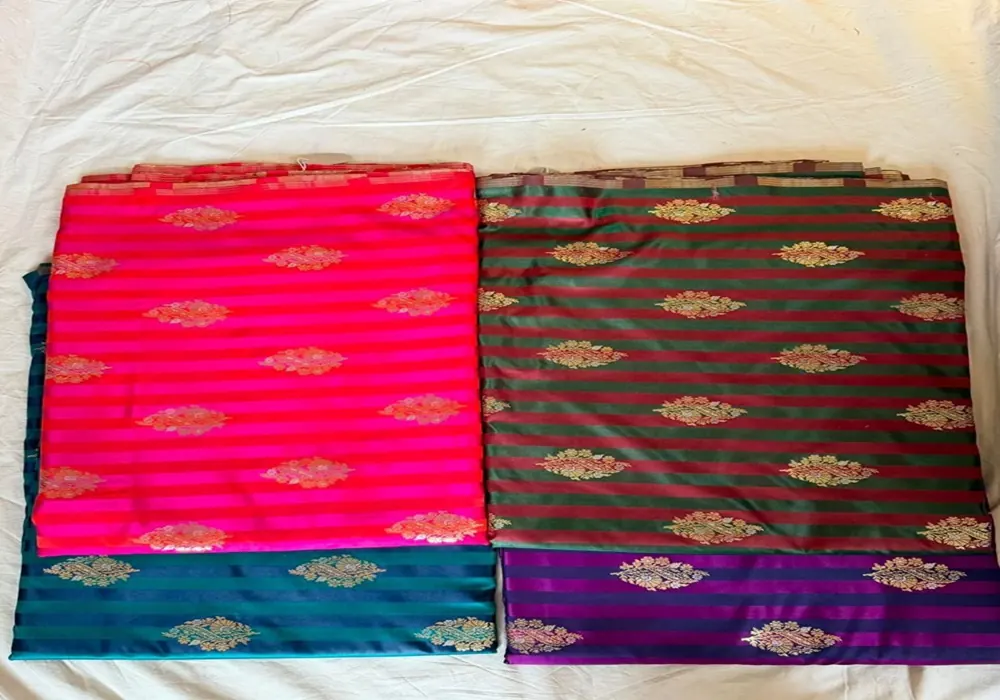
Few people outside Varanasi understand just how many hands and hours go into a single metre of Banarasi silk fabric. The process begins with raw silk yarn, sourced and graded for thickness and strength, which is then dyed in small batches to achieve the rich, saturated colors Banarasi fabric is known for. Before weaving begins, the yarn undergoes “warping” , thousands of individual threads are aligned and wound onto a beam in precise sequence, forming the foundation of the loom. For brocade and jacquard fabrics, a second crucial step follows: pattern coding. Traditionally this involved punched cards (Jacquard mechanism), where each card dictated which threads would rise or fall to create a specific motif , essentially an early form of programmed design, centuries before computers. The actual weaving is where artistry takes over. A skilled weaver, often working with an assistant, moves the shuttle by hand through the loom, repeating the motif pattern row by row. A single intricate piece, particularly one with dense zari work like Kimkhab, can take anywhere from several days to a few weeks to complete, depending on the complexity of the motif and the density of metallic thread used. Quality checking happens throughout, not just at the end , weavers regularly inspect tension, color consistency, and motif alignment, since even a small error early on compounds across the length of the fabric. This is why genuine Banarasi silk carries a price that reflects real labor and skill, not just material cost. At Choubey Silk, we work directly with master weavers in Varanasi, ensuring every metre that reaches our clients honors this centuries-old craft rather than cutting corners through powerloom shortcuts dressed up as handloom.