
For a fashion label, retailer or purchasing team, Banarasi brocade repeat order consistency is not merely a search
phrase: it represents a practical sourcing decision. Banarasi textiles can vary widely in fibre composition,
construction, design scale and finishing. The strongest purchasing process begins with a clear intended use, an
approved physical sample and a written specification. This guide explains the decisions that matter most and the
questions worth asking before a commercial commitment.
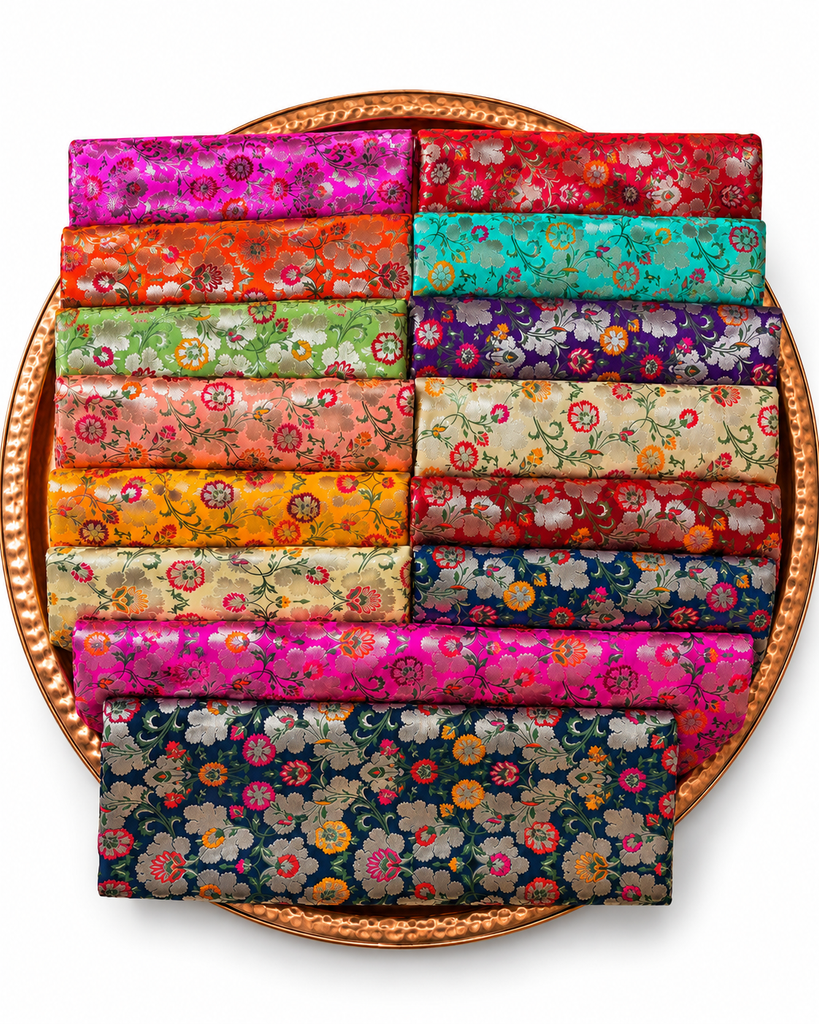
Maintain a master reference library
Start by identifying the finished product and the buyer requirement. A fabric suitable for a structured sherwani may
not be suitable for a lightweight kurta or a frequently handled accessory. Write down the preferred fibre composition,
weave type, finished width, visual effect, quantity and target delivery window. Where any specification is unknown,
ask for a sample rather than relying on descriptive marketing terms.
For this topic, the practical question is: Keep an approved master swatch and roll identification. This should be
answered in writing and supported by a sample, drawing, calculation or test record where appropriate. A good
supplier conversation clarifies both what is possible and what remains conditional on production or availability.
Understand dye and yarn lot variation
Treat each technical variable as part of one connected decision. Width affects cutting yield; motif size affects
placement; yarn and zari choices affect appearance and care; finishing influences handfeel. Ask the supplier to
explain the trade-offs, and compare options under consistent lighting and with the same garment or product
prototype.
For this topic, the practical question is: Do not assume two production lots will be visually identical. This should be
answered in writing and supported by a sample, drawing, calculation or test record where appropriate. A good
supplier conversation clarifies both what is possible and what remains conditional on production or availability.
Forecast production windows
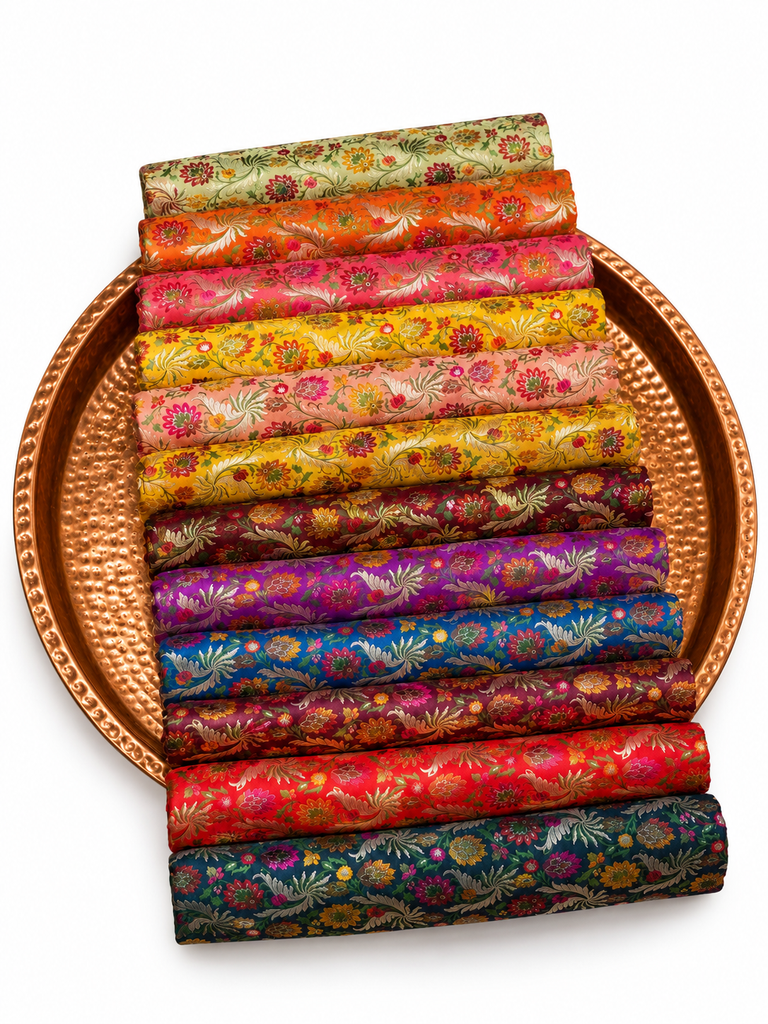
A physical sample is a working reference, not just a sales illustration. Inspect both faces of the fabric, check
selvedges and repeat direction, and note any visible differences between sample pieces. Where performance
matters, agree suitable testing methods and acceptable results before bulk production rather than after delivery.
For this topic, the practical question is: Confirm repeatability before promising replenishment to customers. This
should be answered in writing and supported by a sample, drawing, calculation or test record where appropriate. A
good supplier conversation clarifies both what is possible and what remains conditional on production or availability.
Create an effective reorder protocol
Once a choice is made, record the approved colour, design, width, composition, sample code, commercial terms
and expected milestones in one shared document. Agree how substitutions, revisions and quality disputes will be
handled. This reduces confusion when different teams manage design, purchasing, production and logistics.
Choubey Silk | SEO editorial drafts 42
For this topic, the practical question is: Keep an approved master swatch and roll identification. This should be
answered in writing and supported by a sample, drawing, calculation or test record where appropriate. A good
supplier conversation clarifies both what is possible and what remains conditional on production or availability.
A practical buyer workflow
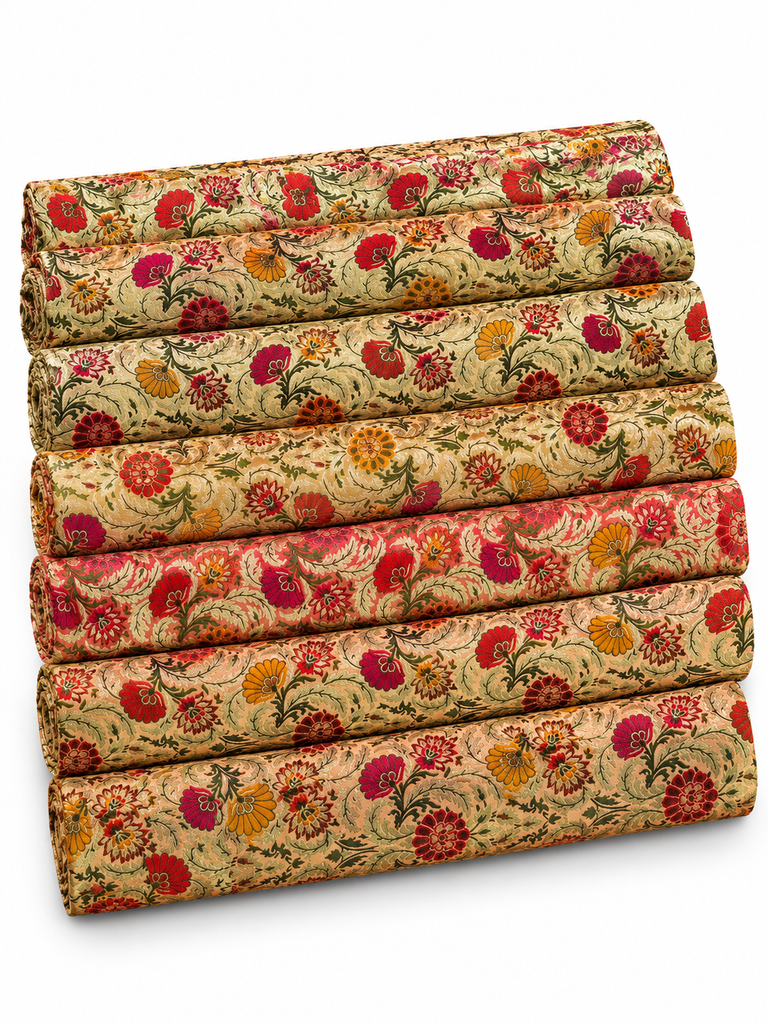
First, prepare a short brief with end use, target market, dimensions, colour references, volume and timing. Second,
request labelled swatches and a quotation that states assumptions. Third, test or prototype the selected fabric in its
actual application. Fourth, approve a dated master sample and final technical specification. Fifth, check the dispatch
documents and keep lot-level records for future reorders.
Questions to ask before confirming an order
- Keep an approved master swatch and roll identification.
- Do not assume two production lots will be visually identical.
- Confirm repeatability before promising replenishment to customers.
What buyers should avoid
Avoid choosing solely from photographs, treating every fabric described as “silk” as compositionally identical, or
assuming the same price and lead time apply to every weave. Do not claim certification, handloom origin, wash
performance or regulatory compliance unless the particular fabric and documentation support the claim. For
international orders, duties and legal requirements depend on the destination, classification and current rules.
Working with Choubey Silk
Choubey Silk Exports Pvt. Ltd. is based in Varanasi and presents Banarasi silk, brocade and jacquard fabrics for
business buyers. Share your end use, required composition, approximate quantity, colour or motif references and
delivery destination so the team can discuss suitable available options, sampling and a quotation. Enquire at
https://choubeysilk.com/contact/.