A designer kurta begins with more than an attractive silhouette.
It begins with the fabric.
The textile determines how the garment falls, how it reflects light, how clearly the pattern appears, how premium the finished outfit feels and how effectively the designer can translate an idea into clothing.
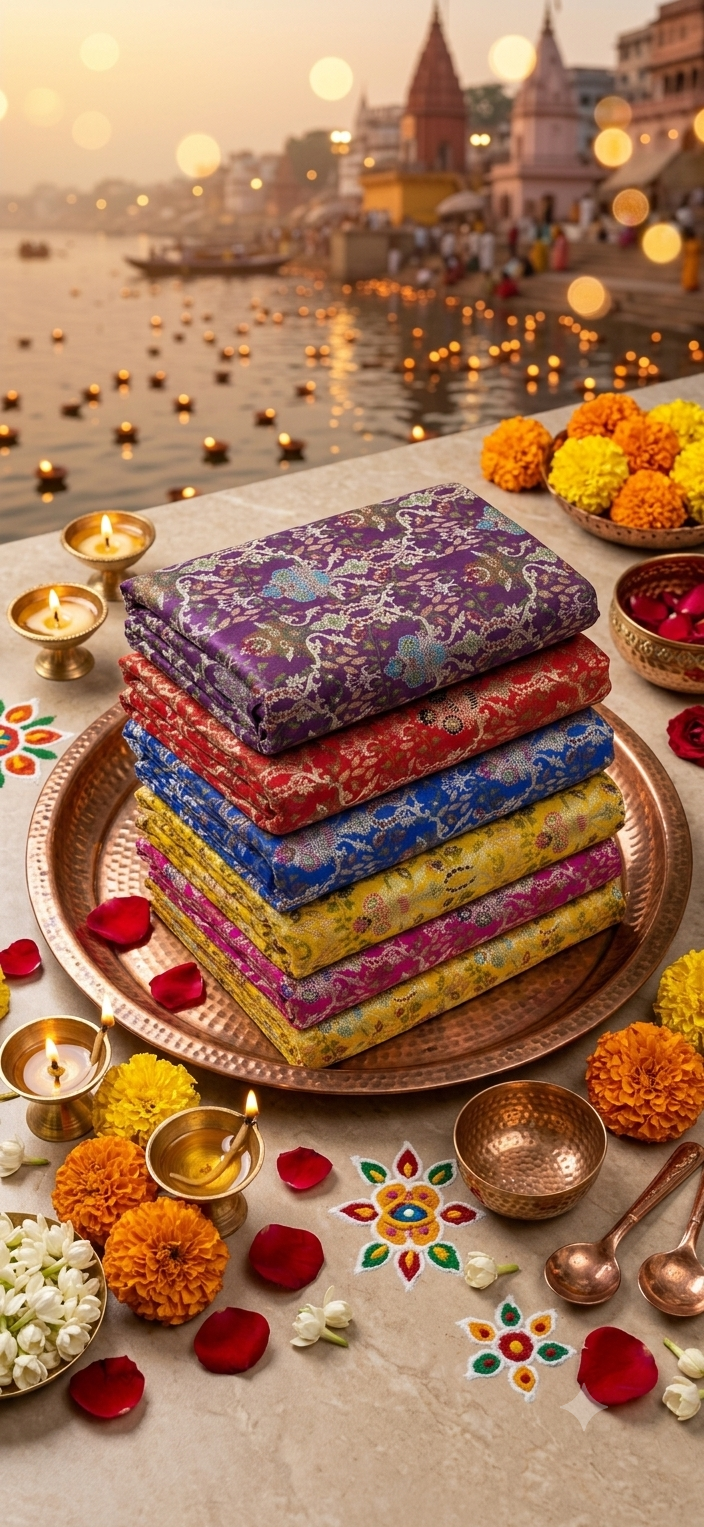
For men’s ethnic and occasion wear, Banarasi jacquard fabric offers an exceptional combination of woven texture, pattern versatility and visual character.
It can be subtle enough for a sophisticated festive kurta, rich enough for a groom’s wedding wardrobe and contemporary enough for a modern designer collection.
This versatility is precisely why Banarasi jacquard has become such an important textile direction for premium men’s kurtas.
At Choubey Silk, Varanasi, our focus is on premium fabrics for men’s ethnic, wedding and occasion wear. Our collections include Banarasi jacquard, brocade, Katan silk, Moonga, Chiniya, raw silk, satin-based fabrics and other premium woven textiles suitable for kurtas, sherwanis, Indo-Western outfits, Nehru jackets, bandhgalas and groom wear.
For designers, boutiques, retailers, garment manufacturers, wedding buyers and individual customers, the question is not simply whether jacquard is suitable for a kurta.
The more useful question is:
Which type of Banarasi jacquard will create the right kurta for the customer, occasion and design?
From tonal self-jacquards and traditional floral butis to contemporary geometry, checks, stripes and zari patterns, the possibilities are extensive.
This detailed guide explores why Banarasi jacquard fabric is perfect for designer kurtas, how different patterns can be used and what buyers should consider before selecting fabric.
What Is Banarasi Jacquard Fabric?
Jacquard refers to a method of creating pattern through the woven construction of the textile.
Instead of relying only on surface printing, the design becomes part of the fabric structure.
This can give the textile greater visual depth.
Depending on the yarns, weave and pattern, different areas of the design may interact differently with light.
For men’s kurtas, this is particularly valuable.
A garment can appear relatively understated from a distance while revealing intricate woven details at closer range.
Banarasi jacquard can incorporate many design directions, including:
- Floral motifs
- Small butis
- Jaals
- Paisleys
- Geometry
- Checks
- Stripes
- Self-patterns
- Heritage-inspired motifs
- Zari detailing
This diversity makes jacquard adaptable to many styles of men’s kurtas.
Why Banarasi Jacquard Works So Well for Men’s Kurtas
The kurta is a relatively simple garment in terms of basic silhouette.
That simplicity gives the fabric an important role.
When there is less complicated construction, textile character becomes more visible.
A premium jacquard can add interest without requiring excessive embroidery or additional decoration.
The woven design itself can become the main visual element.
This makes Banarasi jacquard particularly effective for designer kurtas.
Fabric Can Transform the Same Kurta Silhouette
Imagine the same straight-cut men’s kurta made in four different fabrics.
The first uses ivory self-jacquard.
It looks refined and minimal.
The second uses a small floral Banarasi pattern with antique gold.
It feels more traditional and festive.
The third uses geometric jacquard.
It immediately becomes more contemporary.
The fourth uses richer zari jacquard.
It develops a stronger wedding identity.
The garment pattern may remain almost identical.
The fabric changes the entire fashion language.
This demonstrates why textile selection is so important in designer menswear.
Self-Jacquard for Minimal Designer Kurtas
One of the strongest applications of jacquard in modern men’s fashion is the self-pattern.
Self-jacquard generally keeps the woven design close to the base colour.
The result is subtle.
Instead of strong colour contrast, the pattern is revealed through texture and light.
This makes self-jacquard suitable for customers who prefer understated luxury.
Popular colour directions can include:
- Ivory
- Cream
- Champagne
- Beige
- Baby pink
- Pista
- Powder blue
- Lavender
- Navy
- Wine
Self-jacquard kurtas can work particularly well for engagement ceremonies, festive occasions, wedding functions and refined evening wear.
Floral Banarasi Jacquard for Designer Kurtas
Floral motifs remain one of the most recognisable directions in Indian textile design.
But floral menswear does not have to feel overly traditional.
Modern floral jacquards can use:
- Smaller motifs
- Greater spacing
- Tonal colours
- Antique metallic detailing
- Simplified botanical forms
- Structured repeats
- Florals combined with geometry
For men’s kurtas, smaller and medium-scale floral patterns can be particularly versatile.
They create visible design while allowing the garment silhouette to remain balanced.
Small Butis for Premium Men’s Kurtas
Small butis are especially effective in kurta fabrics.
Because they repeat across the textile, they can create consistent visual texture.
They are generally easier to place across garment panels than very large motifs.
A small buti can be:
- Tonal
- Metallic
- Floral
- Geometric
- Heritage-inspired
This makes buti-based jacquards suitable for festive kurtas, wedding guest outfits and premium retail collections.
Geometric Banarasi Jacquard for Modern Kurtas
One of the most exciting developments in men’s ethnic fashion is the growth of geometric design.
Many younger customers appreciate Indian garments but want patterns that feel contemporary.
Geometry provides that bridge.
Possible designs include:
- Diamonds
- Grids
- Interlocking shapes
- Linear forms
- Architectural patterns
- Abstract arrangements
- Small repeated geometry
These patterns work particularly well with clean kurta silhouettes.
The result can feel modern while retaining the depth of woven fabric.
Why Geometry Works Naturally in Menswear
Geometry is already familiar within men’s fashion.
Checks, stripes and structured patterns appear throughout tailoring and casualwear.
When similar visual ideas are translated through Banarasi jacquard, the result can feel familiar and distinctive at the same time.
A geometric jacquard kurta can therefore appeal to customers who might find elaborate florals too traditional.
This broadens the audience for premium Banarasi fabrics.
Checks in Banarasi Jacquard Kurtas
Checks provide another contemporary direction.
A conventional check can become much richer when interpreted through woven texture.
Designs can include:
- Tonal checks
- Small grids
- Metallic checks
- Multi-scale check patterns
- Geometric check combinations
These fabrics can be particularly suitable for contemporary festive kurtas and designer menswear collections.
Striped Jacquard for Men’s Kurtas
Stripes can create a clean and elegant appearance.
Vertical woven patterns can visually lengthen the garment.
Subtle tonal stripes can create texture.
Metallic lines can add festive character.
More complex jacquard stripes can combine geometry with traditional woven detail.
This makes striped jacquard another valuable option for designers looking beyond conventional motifs.
Zari in Banarasi Jacquard Kurta Fabrics
Zari can introduce metallic character into a woven textile.
For men’s kurtas, the key is balance.
Not every kurta requires rich metallic coverage.
Different levels of zari can create very different results.
Subtle Zari
Suitable for elegant festive kurtas and customers who prefer minimal luxury.
Moderate Zari
Can work beautifully for wedding functions and groom pre-wedding outfits.
Richer Zari
Can be appropriate when the kurta itself needs to become the statement garment.
The tone of the metallic detail also matters.
Bright gold creates a different aesthetic from antique gold or copper.
Antique Gold for Contemporary Kurta Fabrics
Antique gold is particularly useful in modern men’s fashion.
It can provide metallic richness without appearing excessively bright.
Antique gold works effectively with:
- Ivory
- Cream
- Champagne
- Beige
- Pista
- Baby pink
- Navy
- Wine
It can be used in floral, geometric and buti-based jacquards.
For designer kurtas, this creates a sophisticated balance between festive character and contemporary styling.
Copper Accents in Modern Jacquard
Copper provides another metallic direction.
Its warmth can be particularly effective in geometric fabrics.
Copper can be combined with antique gold or used as a smaller accent.
It can work well with:
- Champagne
- Beige
- Pista
- Pink
- Navy
- Dark evening shades
For fashion designers, copper provides an alternative to conventional gold-focused wedding textiles.
Meena Detailing for Designer Kurtas
Meena introduces controlled colour within woven motifs.
For men’s fabrics, subtle accents can be especially effective.
A geometric jacquard may use antique gold outlines with tiny coloured details.
A floral buti can include a small contrasting shade.
Possible colours can include:
- Baby pink
- Pista
- Blue
- Copper
- Other complementary tones
The objective is often to add depth without making the textile excessively colourful.
Ivory Banarasi Jacquard Kurtas
Ivory remains one of the most versatile colours in premium men’s ethnic wear.
Its strength lies in its ability to support many design directions.
Ivory self-jacquard can feel minimal.
Ivory with gold butis can become festive.
Ivory with antique gold geometry can feel contemporary.
Ivory with subtle meena can coordinate with wedding colour palettes.
This versatility makes ivory an important colour for designer kurta collections.
Cream and Off-White Jacquards
Cream and off-white provide a slightly warmer alternative.
They work particularly well with:
- Gold
- Antique gold
- Copper
- Tonal weaving
- Traditional florals
- Geometric patterns
These shades can be used across festive, wedding and groom collections.
Champagne Jacquard for Men’s Kurtas
Champagne has become a sophisticated neutral for men’s occasion wear.
It can appear richer than cream while remaining relatively understated.
Champagne works beautifully with tonal patterns and antique metallic effects.
It can be particularly suitable for engagement ceremonies, daytime weddings and premium groom wardrobes.
Pastel Banarasi Jacquard Kurtas
Pastels have expanded the men’s ethnic-wear colour palette.
Popular directions can include:
- Baby pink
- Pista
- Sage
- Powder blue
- Lavender
- Peach
A plain pastel may appear relatively simple.
Jacquard gives the colour greater depth.
A tonal pattern can remain subtle.
Antique gold can introduce warmth.
Meena can add controlled contrast.
These combinations work especially well for modern wedding collections.
Dark Jacquards for Evening Kurtas
Designer kurtas are not limited to light colours.
Dark fabrics can create sophisticated evening garments.
Potential shades include:
- Navy
- Wine
- Maroon
- Deep jewel tones
- Dark neutrals
Tonal patterns can create understated depth.
Metallic geometry can become more visible against a darker base.
These fabrics can work particularly well for sangeet and reception events.
Banarasi Jacquard for Festive Kurtas
Festive kurtas do not always require heavy decoration.
A woven jacquard can provide enough visual interest on its own.
Small butis, self-patterns and subtle geometry can create premium festive garments.
The advantage is that the fabric provides design throughout the garment rather than concentrating ornamentation in only one area.
Banarasi Jacquard for Wedding Guest Kurtas
Wedding guests often need an outfit that feels special without competing visually with the groom.
Jacquard is particularly useful for this market.
A pastel floral fabric can create daytime elegance.
A geometric pattern can provide modern character.
A dark jacquard can work for an evening function.
A self-jacquard can create understated sophistication.
This gives retailers multiple design directions within one textile category.
Banarasi Jacquard for Groom Kurtas
The modern groom often requires several kurtas across different wedding functions.
Each can have a different textile identity.
Engagement
Ivory, champagne or pastel self-jacquard.
Haldi
Lighter woven fabrics with restrained patterns.
Mehendi
Fresh colours and small motifs.
Sangeet
Metallic geometry or stronger jacquard.
Wedding Morning
Premium Katan-based or Banarasi woven kurta fabrics.
Reception-Related Styling
Dark jacquard can work under a jacket or bandhgala.
This means the groom-wear market creates significant opportunities for premium kurta fabrics.
Designer Kurtas and Nehru Jackets
Banarasi jacquard also works exceptionally well when a kurta is paired with a Nehru jacket.
Designers can use contrast in two ways.
A plain or subtle kurta can be paired with a stronger jacquard jacket.
Alternatively, a jacquard kurta can be paired with a relatively plain jacket.
The objective is balance.
When both garments are highly patterned, the outfit can become visually busy.
Thoughtful fabric coordination produces a more refined result.
Banarasi Jacquard Kurtas with Indo-Western Styling
A kurta does not have to be styled traditionally.
Contemporary designers can combine jacquard kurtas with:
- Structured jackets
- Asymmetric layers
- Contemporary trousers
- Bandhgalas
- Modern footwear
- Minimal accessories
This expands Banarasi jacquard beyond conventional ethnic styling.
The same fabric can participate in a modern Indo-Western wardrobe.
Pattern Scale Matters in Kurta Fabric
Motif scale is one of the most important considerations when selecting jacquard.
Small Motifs
Highly versatile and generally easy to work across kurta panels.
Medium Motifs
Provide stronger visual identity while remaining manageable.
Large Motifs
Can create dramatic garments but require careful placement.
For most commercial kurta production, small and medium-scale repeats can offer significant flexibility.
Pattern Repeat and Kurta Cutting
Design repeat matters because a kurta contains several sections.
These can include:
- Front
- Back
- Sleeves
- Collar
- Placket
- Cuffs
A directional or large-scale pattern may require careful placement.
Checks and stripes may need alignment.
Designers and manufacturers should therefore examine repeat before calculating fabric consumption.
Fabric Width and Kurta Production
Fabric width affects cutting efficiency.
This becomes particularly important for garment manufacturers producing multiple sizes.
Before placing a larger order, professional buyers should evaluate:
- Width
- Motif repeat
- Direction
- Garment dimensions
- Expected consumption
This helps ensure that an attractive textile is also commercially practical.
Weight and Drape in Kurta Fabric
A kurta generally requires enough movement to remain comfortable.
The textile should work with the intended silhouette.
A straight structured kurta may tolerate more body.
A relaxed kurta may benefit from greater drape.
A wedding kurta can support more surface richness.
The ideal fabric depends on the final garment rather than simply the textile category.
Why Touch and Movement Matter
Fabric is experienced in three dimensions.
A photograph can show colour and pattern, but it cannot fully communicate how the textile falls.
When possible, buyers should consider:
- Surface texture
- Flexibility
- Weight
- Drape
- Thickness
- Light reflection
These factors influence the finished kurta significantly.
Banarasi Jacquard vs Plain Fabric for Designer Kurtas
Plain fabric provides a clean surface and can be excellent when the garment relies heavily on embroidery or construction.
Jacquard offers a different approach.
The textile itself provides design.
This can reduce the need for additional ornamentation.
A premium jacquard kurta may require only thoughtful tailoring and carefully selected buttons or finishing details.
The woven pattern becomes the design feature.
Banarasi Jacquard vs Brocade for Kurtas
Jacquard and brocade can both be used for premium menswear, but their visual impact can differ.
Jacquard offers enormous flexibility from subtle self-patterns to richer designs.
Brocade generally moves toward a more decorative woven surface.
For a minimalist kurta, jacquard may be the more natural direction.
For a ceremonial statement garment, a richer brocade may be considered.
The choice depends on the required look.
Banarasi Jacquard vs Katan Silk for Kurtas
This is not always an either-or comparison because fabric construction can vary.
Katan silk can provide refined silk character.
Jacquard focuses attention on woven pattern and surface design.
The correct choice depends on whether the garment’s identity should come primarily from silk character, woven pattern or a combination of both.
Why Designers Value Banarasi Jacquard
Fashion designers need textiles capable of supporting creative differentiation.
Jacquard provides this through pattern.
A collection can be developed around:
- Geometry
- Florals
- Tonal self-designs
- Pastels
- Antique metallics
- Checks
- Stripes
Each direction can become its own design story.
This makes Banarasi jacquard especially useful for designers who want to create distinctive men’s ethnic-wear collections.
Banarasi Jacquard for Boutiques
Boutiques need variety because customers have different preferences.
A balanced kurta-fabric assortment might include:
- Ivory self-jacquard
- Pastel florals
- Small butis
- Geometric patterns
- Antique gold designs
- Dark evening jacquards
- Checks
- Stripes
This allows the retailer to serve both traditional and contemporary customers.
Banarasi Jacquard for Men’s Ethnic-Wear Retailers
Retailers can organise their jacquard collections according to occasion.
For example:
Festive Collection
Small motifs and self-patterns.
Wedding Guest Collection
Florals, pastels and subtle zari.
Groom Collection
Premium jacquards with stronger woven character.
Contemporary Collection
Geometry, checks and stripes.
Evening Collection
Dark colours and metallic patterns.
This makes it easier for customers to understand how different fabrics can be used.
Wholesale Banarasi Jacquard for Kurta Manufacturers
Commercial buyers need more than an attractive pattern.
They need fabric that works with production.
Before sourcing wholesale Banarasi jacquard for men’s kurtas, buyers should consider:
- Quantity
- Fabric width
- Weight
- Pattern repeat
- Motif direction
- Colour
- Garment size range
- Production schedule
A design that works beautifully for a single custom kurta may require additional evaluation before larger-scale manufacturing.
Banarasi Jacquard for Garment Manufacturers
Manufacturers should examine cutting efficiency.
A small all-over pattern may provide flexibility.
Large motifs may require more careful placement.
Checks may require matching across seams.
Stripes may need alignment.
Directional designs may influence marker planning.
Understanding these factors before production helps connect textile selection with garment efficiency.
Banarasi Jacquard for Fashion Brands
For a fashion brand, fabric can become part of its visual identity.
One brand may focus on understated self-jacquards.
Another may specialise in contemporary geometry.
A groom-wear label may prefer richer metallic patterns.
A premium kurta brand may build collections around small woven motifs.
Banarasi jacquard provides enough diversity to support these different brand identities.
Banarasi Jacquard for International Men’s Fashion
Indian men’s ethnic and wedding fashion has a substantial international audience.
Designers, boutiques, wedding retailers and garment manufacturers serving customers in the United States, United Kingdom, UAE, Canada, Australia, Europe and the Middle East may require fabrics for kurta and occasion-wear collections.
Different markets can require different aesthetics.
Traditional wedding stores may prefer florals and zari.
Contemporary labels may prefer geometry.
Destination-wedding collections may focus on pastels.
Minimalist brands may prefer self-jacquard.
The versatility of Banarasi jacquard makes it relevant across these different requirements.
Why Source Banarasi Jacquard from Varanasi?
Varanasi has a deep association with woven textile design.
For buyers, the city offers access to a broad textile vocabulary.
Men’s jacquard collections can explore:
- Florals
- Butis
- Heritage motifs
- Geometry
- Checks
- Stripes
- Self-patterns
- Zari
- Contemporary designs
This variety allows designers and manufacturers to develop collections for multiple occasions while maintaining a connection with Banarasi textile traditions.
Choubey Silk – Banarasi Jacquard Fabrics for Men’s Kurtas
At Choubey Silk, Varanasi, our focus is on premium fabrics for men’s ethnic, wedding and occasion wear.
Banarasi jacquard forms an important part of this design direction because of its versatility.
Our broader men’s fabric collections include textiles suitable for: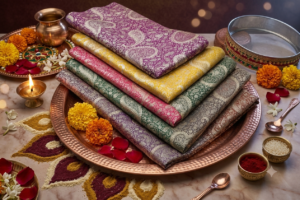
- Designer kurtas
- Wedding kurtas
- Groom kurtas
- Sherwanis
- Indo-Western outfits
- Nehru jackets
- Bandhgalas
- Wedding jackets
Buyers can explore different patterns according to their garment and market requirements.
How to Enquire for Banarasi Jacquard Kurta Fabric
Specific enquiries make sourcing easier.
Instead of asking only:
“I need jacquard.”
Try:
“I need small geometric Banarasi jacquard for men’s kurtas.”
“I am looking for ivory self-jacquard for premium kurtas.”
“I require pastel floral jacquard for wedding kurtas.”
“I need antique gold jacquard for a groom collection.”
“I require wholesale jacquard fabric for men’s kurta manufacturing.”
Usef