A beautifully designed kurta can look completely different depending on the textile used to create it. Fabric determines the garment’s texture, drape, structure, comfort, sheen and overall character. From a subtle festive kurta to an elaborate wedding outfit, selecting the right material is one of the most important decisions in creating premium men’s ethnic wear.
At Choubey Silk, Varanasi, we understand the importance of fabric in defining the final garment. Our collections bring together the textile heritage of Banaras with the changing preferences of modern men’s fashion.
From sophisticated Banarasi jacquards and Katan silk to brocade, Moonga, Chiniya, raw silk, satin-based fabrics and contemporary woven designs, there are numerous options available for designers, retailers, garment manufacturers, wholesalers and customers searching for premium kurta fabrics.
But which fabric is ideal for a men’s kurta?
The answer depends on several factors: the occasion, season, garment silhouette, desired level of richness, colour palette and personal style.
This comprehensive guide explores some of the best fabrics for men’s kurtas, how different woven constructions affect the finished garment, and how buyers can select the right material for festive, wedding and premium ethnic-wear collections.
Why Fabric Selection Matters for a Men’s Kurta
The kurta appears simple in construction, but fabric selection can dramatically change its personality.
Imagine the same kurta pattern made in three different materials.
A plain silk fabric may create a clean, elegant garment.
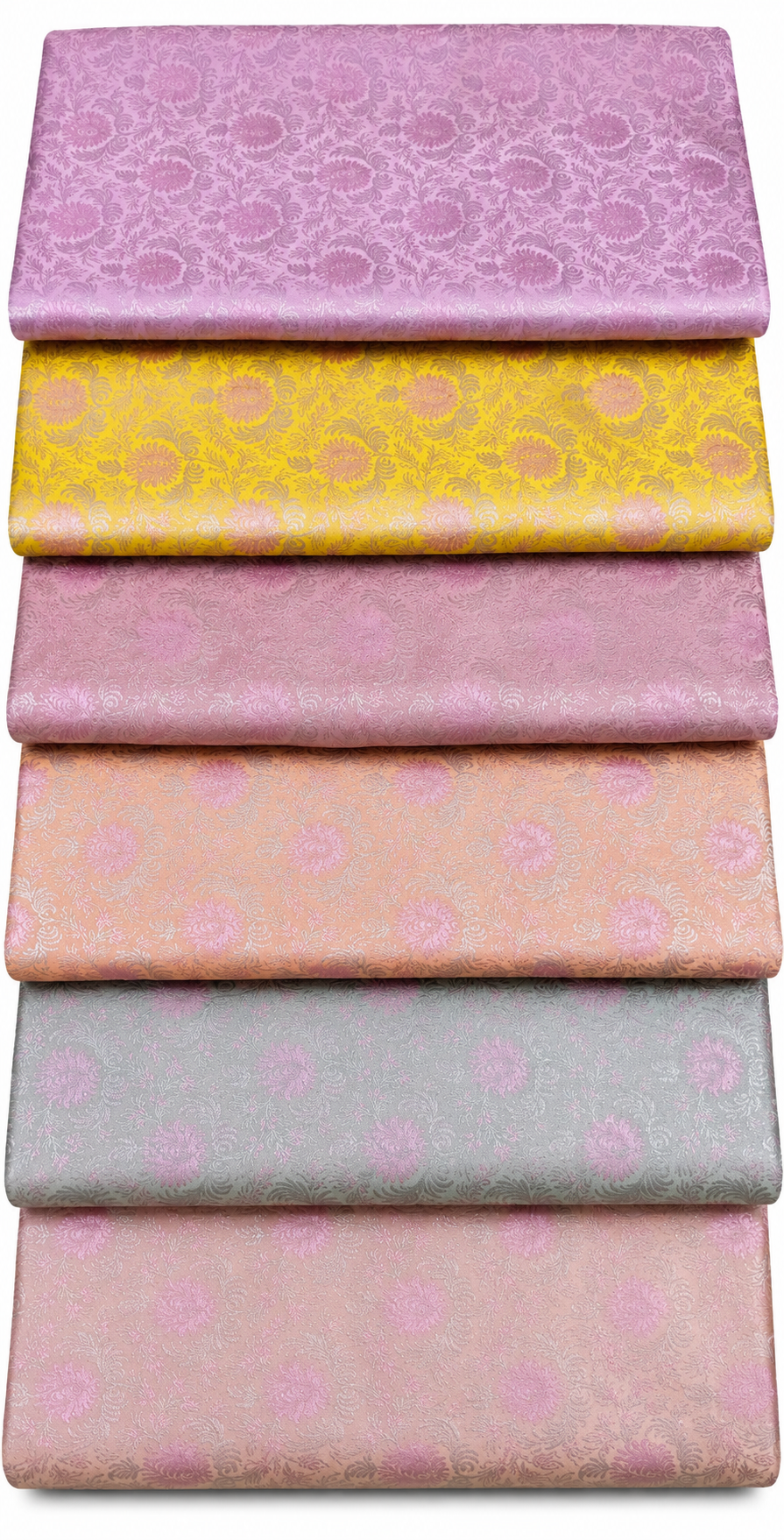
A self-jacquard can introduce subtle texture while retaining sophistication.
A rich Banarasi jacquard with zari may transform the same silhouette into luxurious wedding wear.
The pattern has not changed. The fabric has.
This demonstrates why professional designers pay so much attention to textile selection.
A good kurta fabric should be evaluated for more than colour. Important characteristics can include:
- Fabric construction
- Weight
- Drape
- Texture
- Surface design
- Motif size
- Zari intensity
- Width
- Colour
- Hand-feel
- Intended season
- Intended occasion
- Garment silhouette
Selecting these elements carefully helps create a kurta that looks balanced and appropriate for its intended use.
Varanasi and the Tradition of Premium Woven Fabrics
Varanasi, also known as Banaras or Kashi, occupies a special place in India’s textile history.
The city is internationally associated with sophisticated weaving traditions and the distinctive beauty of Banarasi textiles.
Generations of textile artisans have developed an extraordinary design vocabulary that includes floral motifs, butis, jaals, paisleys, botanical patterns, Mughal-inspired elements and intricate geometric arrangements.
Traditionally, Banarasi textiles are often associated with highly ceremonial clothing.
However, contemporary weaving has expanded considerably.
Today, Banarasi-inspired fabrics for men’s kurtas can include subtle self-patterns, modern geometry, checks, stripes, small butis and restrained zari.
This allows designers to create kurtas that range from deeply traditional to completely contemporary.
For buyers looking for a men’s kurta fabric supplier in Varanasi, this diversity provides an enormous creative advantage.
1. Banarasi Jacquard – One of the Best Fabrics for Designer Kurtas
Banarasi jacquard is among the most versatile choices for premium men’s kurtas.
The primary advantage of jacquard lies in its woven design.
Instead of simply applying a pattern to the surface, the design becomes part of the fabric’s construction.
This creates visual depth and texture.
Depending on the design, Banarasi jacquard can be subtle enough for an elegant festive kurta or rich enough for an elaborate wedding outfit.
Why Banarasi Jacquard Works for Kurtas
A kurta has a relatively large uninterrupted front area.
This creates an excellent canvas for woven patterns.
Small motifs can provide subtle texture.
Medium-scale florals can create a stronger festive appearance.
Geometric jacquards can introduce contemporary style.
Zari-enhanced patterns can make the garment suitable for weddings and formal occasions.
For this reason, designers can use jacquard across multiple collections without every garment looking similar.
2. Self-Jacquard for Understated Luxury
Not every premium kurta needs heavy zari or elaborate patterns.
Sometimes the most sophisticated fabric is one that reveals its details gradually.
Self-jacquards use woven patterns close to the base colour of the textile.
From a distance, the fabric may appear relatively simple.
As the light changes or the viewer moves closer, the woven texture becomes more visible.
This makes self-jacquard particularly suitable for customers who appreciate quiet, understated luxury.
Self-jacquard kurtas can work well for:
- Family celebrations
- Festive gatherings
- Engagement functions
- Evening events
- Religious occasions
- Premium everyday ethnic wear
- Wedding guest outfits
Colours such as ivory, cream, beige, pastel pink, pista, powder blue and deeper jewel tones can all work effectively depending on the design.
3. Geometric Jacquard for Modern Men’s Kurtas
One of the most important developments in men’s ethnic fashion is the increasing popularity of geometric patterns.
While traditional florals remain important, many younger customers prefer cleaner designs.
Geometric jacquards can include:
- Diamonds
- Grids
- Interlocking shapes
- Repeated lines
- Abstract geometry
- Small architectural patterns
- Contemporary checks
- Structured motifs
These patterns allow Banarasi weaving to communicate heritage without appearing overly traditional.
A geometric jacquard kurta can be paired with straight trousers, churidar, pajama or contemporary bottoms depending on the desired styling.
For designers developing modern ethnic collections, geometry offers significant creative possibilities.
4. Floral Banarasi Jacquard for Festive Kurtas
Floral designs are deeply connected with Indian textile traditions.
Banarasi weaving provides countless ways to interpret florals, from small delicate motifs to elaborate botanical arrangements.
For men’s kurtas, motif scale is particularly important.
Smaller florals can create sophisticated all-over texture.
Larger patterns may provide greater impact for wedding and ceremonial garments.
The colour combination also influences the final character.
A floral pattern woven in the same tone as the base fabric may appear understated.
The same design with contrasting zari or meena details can become significantly richer.
This makes floral jacquards extremely adaptable.
5. Katan Silk for Premium Kurtas
Katan silk has an important connection with Banarasi textile craftsmanship.
Its refined silk character and natural appearance make it suitable for premium ethnic garments.
A Katan-based kurta can communicate luxury through the material itself rather than relying only on heavy embellishment.
Depending on the weave, Katan silk may be relatively simple or feature intricate woven patterns.
This makes it useful for different levels of formality.
A plain or subtle Katan fabric can work beautifully for an elegant kurta, while a richer woven construction may be appropriate for wedding functions.
For customers searching for Katan silk fabric for men’s kurta, quality and intended application should be considered carefully.
6. Banarasi Brocade for Wedding Kurtas
Brocade is traditionally associated with rich ceremonial fashion.
Its woven patterns and metallic character make it particularly suitable for wedding garments.
While brocade is frequently used for sherwanis and jackets, carefully selected brocade can also create striking designer kurtas.
The key is balance.
A heavily patterned brocade may be ideal for a short structured kurta or statement garment, while a more restrained brocade can work across a longer silhouette.
Banarasi brocade designs can include:
- Floral jaals
- Paisleys
- Botanical motifs
- Mughal-inspired designs
- Geometric arrangements
- Zari butis
- Traditional heritage patterns
For wedding-wear designers, brocade provides a strong visual identity.
7. Raw Silk for Textured Kurta Designs
Raw silk offers a different aesthetic from smooth silk constructions.
Its visible texture can give a kurta a natural and sophisticated character.
For designers, this texture can be particularly useful when the garment design is relatively minimal.
Instead of relying on elaborate patterns, the fabric surface itself creates visual interest.
Raw silk can work well for:
- Formal kurtas
- Minimal wedding outfits
- Contemporary ethnic wear
- Festive kurtas
- Layered ensembles
It can also provide an effective base for garments combined with a patterned jacket.
A textured kurta underneath a Banarasi jacquard Nehru jacket, for example, can create a balanced combination.
8. Moonga Fabric for Men’s Kurtas
Moonga offers another direction for premium ethnic fashion.
Depending on the specific fabric construction, it can provide a distinctive surface character suitable for traditional and contemporary garments.
For kurta designers, having multiple fabric categories is important because every collection should not rely on the same visual texture.
Moonga fabrics can help create variation across a retail or designer assortment.
The final selection should be based on the garment design, desired drape and occasion.
9. Chiniya Fabric for Elegant Ethnic Wear
Chiniya fabrics provide another textile option for customers seeking premium kurta materials.
Depending on construction and design, they can support elegant festive and occasion-wear garments.
The most important consideration is to evaluate the actual textile rather than selecting material based only on its category name.
Texture, weight, drape, colour and design should all be considered.
At Choubey Silk, buyers can compare different fabric categories according to the garment they intend to create.
10. Satin-Based Fabrics for Contemporary Kurtas
Satin-based fabrics can create a smoother, more fluid appearance.
Their surface can interact beautifully with light, making them particularly suitable for evening garments.
Contemporary designers may use satin-based materials for minimalist kurtas or as complementary fabrics alongside patterned jackets.
Because the surface is relatively clean, tailoring details become particularly visible.
This makes precise garment construction important.
For modern ethnic fashion, combining smooth fabrics with woven Banarasi jackets can create an effective contrast.
Choosing Kurta Fabric According to the Occasion
One of the easiest ways to select fabric is to begin with the occasion.
Everyday Premium Kurta
For regular ethnic dressing, choose fabrics with relatively subtle texture and comfortable drape.
Self-jacquards, simple woven fabrics and restrained patterns can work well.
Festive Kurta
Festivals provide greater