Shopping Cart

x 2

Light Blue Denim Dress
$24.99
x 3
$114.95
View Cart

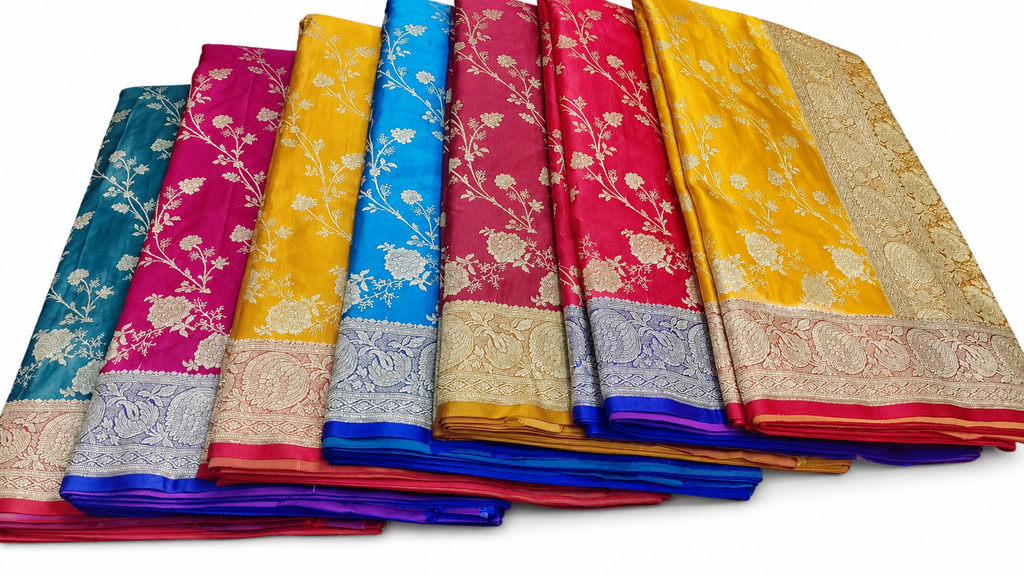
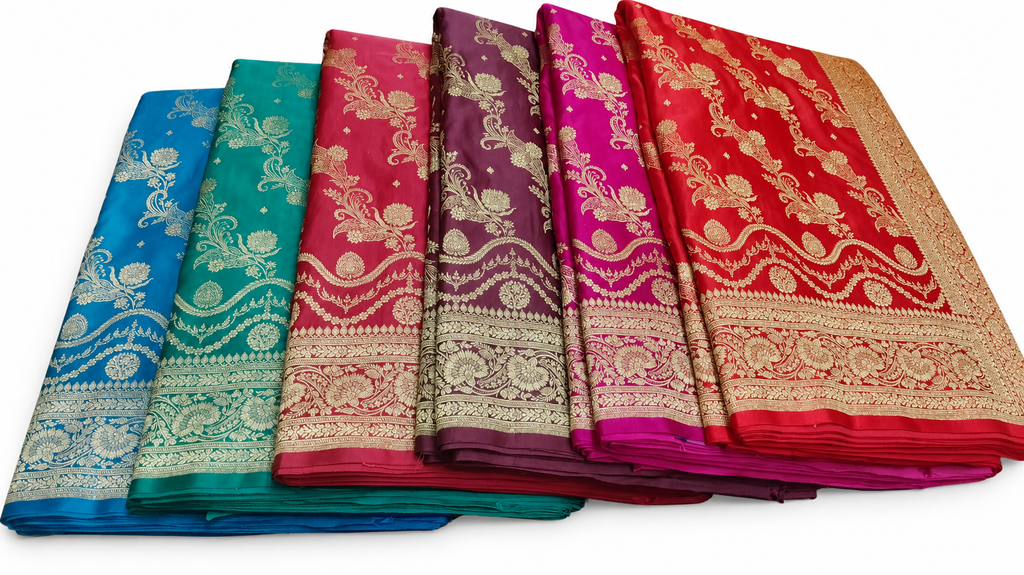
The finished Banarasi saree is the visible result of many steps. Yarn, design preparation, loom setup, weaving, zari
work and finishing all contribute to the final fabric. Understanding the broad process helps buyers recognise
craftsmanship and have more meaningful conversations with textile suppliers in Varanasi.
Design preparation
Traditional patterned textiles begin with design planning and preparation. Depending on the construction, the design
must be translated into instructions that the loom can reproduce.
Yarn and loom preparation
Yarn selection and preparation influence the resulting fabric. The loom is then prepared for the required structure
and pattern.
Weaving the body and border
The body, border and decorative areas are created through the weaving process. Intricate patterns can require
careful control and skilled handling.
Zari and decorative effects
Many Banarasi designs use metallic-looking decorative threads or zari to create contrast and richness. Buyers
should ask the supplier how the product is constructed rather than assuming all zari is identical.
Finishing and inspection
After weaving, the textile is checked and finished for presentation. This stage matters because loose threads,
uneven finishing or other issues can affect the buyer’s experience.
Respecting the craft
The best way to communicate the weaving story is accurately. Avoid turning a complex craft into a simplistic
‘one-step’ story; acknowledge the people and skills involved.