Shopping Cart

x 2

Light Blue Denim Dress
$24.99
x 3
$114.95
View Cart

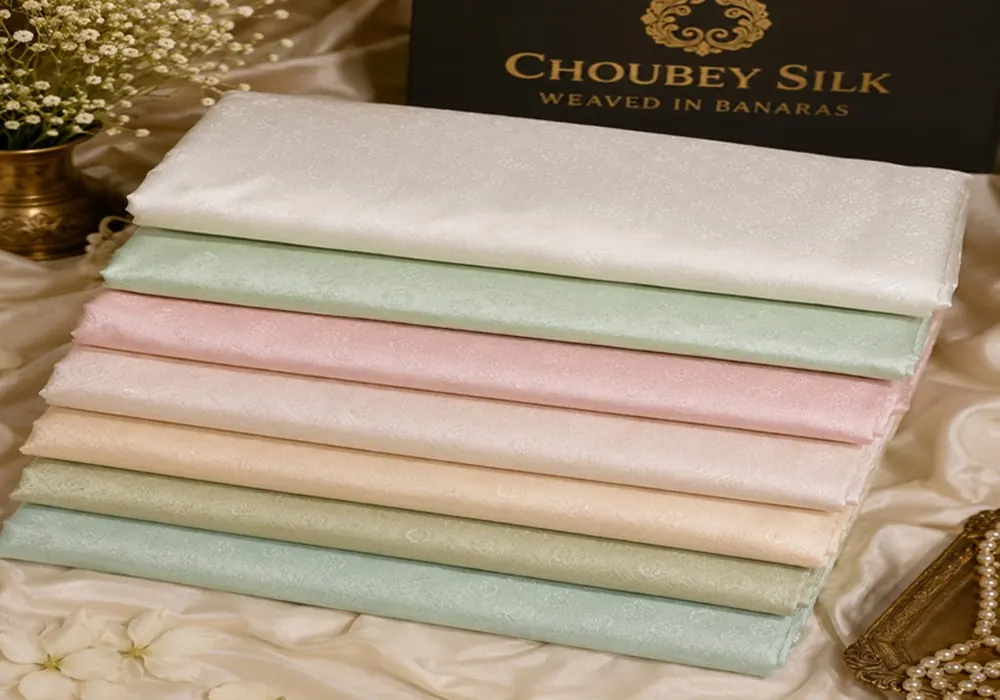
Not every Banarasi jacquard fabric is handwoven , and that’s not necessarily a bad thing, as long as buyers know what they’re getting. Handloom jacquard is produced on traditional pit looms operated manually by artisans, resulting in subtle irregularities, a slightly textured handfeel, and motifs with organic character. It’s slower to produce, costs more, and is limited in quantity, but it carries the heritage value most associated with “authentic” Banarasi weaving. Powerloom jacquard, by contrast, is machine-woven at far higher speed and volume, with patterns that are more uniform and precise. It’s significantly more affordable and ideal for buyers who need consistent stock for retail or wholesale without the longer lead times of handloom production. Neither is inherently superior , the right choice depends on your use case. Boutique and bespoke designers chasing exclusivity and storytelling value typically gravitate toward handloom pieces, while retailers and bulk garment manufacturers often choose powerloom jacquard for cost efficiency and faster turnaround. A simple way to tell them apart visually: handloom fabric often shows minor variations in zari tension and slightly irregular selvedge, while powerloom fabric has a flawless, machine-consistent finish edge to edge. At Choubey Silk, we manufacture and supply both categories, and we label each fabric clearly so designers, boutiques, and wholesalers can choose based on budget, order volume, and the story they want their collection to tell , without confusion over what they’re actually buying. Internal link suggestions: Jaquard Fabric page, Katan Silk page, About Choubey Silk