Modern Indian menswear is changing rapidly.
Traditional garments continue to play an important role in weddings, festivals and celebrations, but today’s customers are increasingly looking for something different—clothing that preserves the richness of Indian textile heritage while embracing cleaner silhouettes, contemporary colours and modern styling.
This evolution has created strong interest in Indo-Western men’s fashion.
From asymmetric kurtas and structured jackets to contemporary bandhgalas, Nehru jackets and modern groom wear, Indo-Western fashion gives designers tremendous freedom to combine Indian craftsmanship with new silhouettes.
At the centre of these garments is one essential element: fabric.
The right fabric can transform an ordinary jacket into a statement garment, give a modern kurta sophisticated texture or provide the richness required for a groom’s wedding outfit.
For designers, retailers, boutiques, wholesalers and garment manufacturers looking for premium Indo-Western fabrics from Varanasi, Banarasi textiles provide a distinctive combination of heritage, woven detail and contemporary design possibilities.
At Choubey Silk, Varanasi, our focus is on premium fabrics for men’s ethnic and occasion wear, including materials suitable for Indo-Western outfits, kurtas, sherwanis, Nehru jackets, bandhgalas, wedding jackets and groom wear.
Our collections include Banarasi jacquard, brocade, Katan silk, Moonga, Chiniya, raw silk, satin-based fabrics and other premium woven textiles suitable for traditional as well as contemporary menswear.
This guide explores how buyers can use Banarasi fabrics for modern Indo-Western garments, what design directions are available and why Varanasi remains an important textile sourcing destination for men’s fashion.
What Are Indo-Western Fabrics?
There is no single fabric category called Indo-Western fabric.
The term generally refers to textiles selected for garments that combine elements of Indian and contemporary fashion.
The same Banarasi jacquard that might be used for a traditional kurta can be transformed into a completely different garment through modern tailoring.
Similarly, a brocade normally associated with ceremonial fashion can become a structured contemporary jacket.
What makes a textile suitable for Indo-Western fashion is therefore not simply its fibre or weave.
The relationship between fabric, pattern, colour and garment silhouette is what matters.
Premium Indo-Western fabrics can include:
- Banarasi jacquard
- Brocade
- Katan silk
- Raw silk
- Moonga
- Chiniya
- Satin-based fabrics
- Self-jacquards
- Geometric woven fabrics
- Checks
- Stripes
- Zari fabrics
Each textile can create a different visual identity.
Why Varanasi Is Important for Indo-Western Fabric Sourcing
Varanasi, also known as Banaras or Kashi, is one of India’s best-known textile centres.
Its weaving traditions have developed over generations, producing an extensive vocabulary of motifs, textures and woven structures.
Traditional Banarasi design may include:
- Floral motifs
- Butis
- Jaals
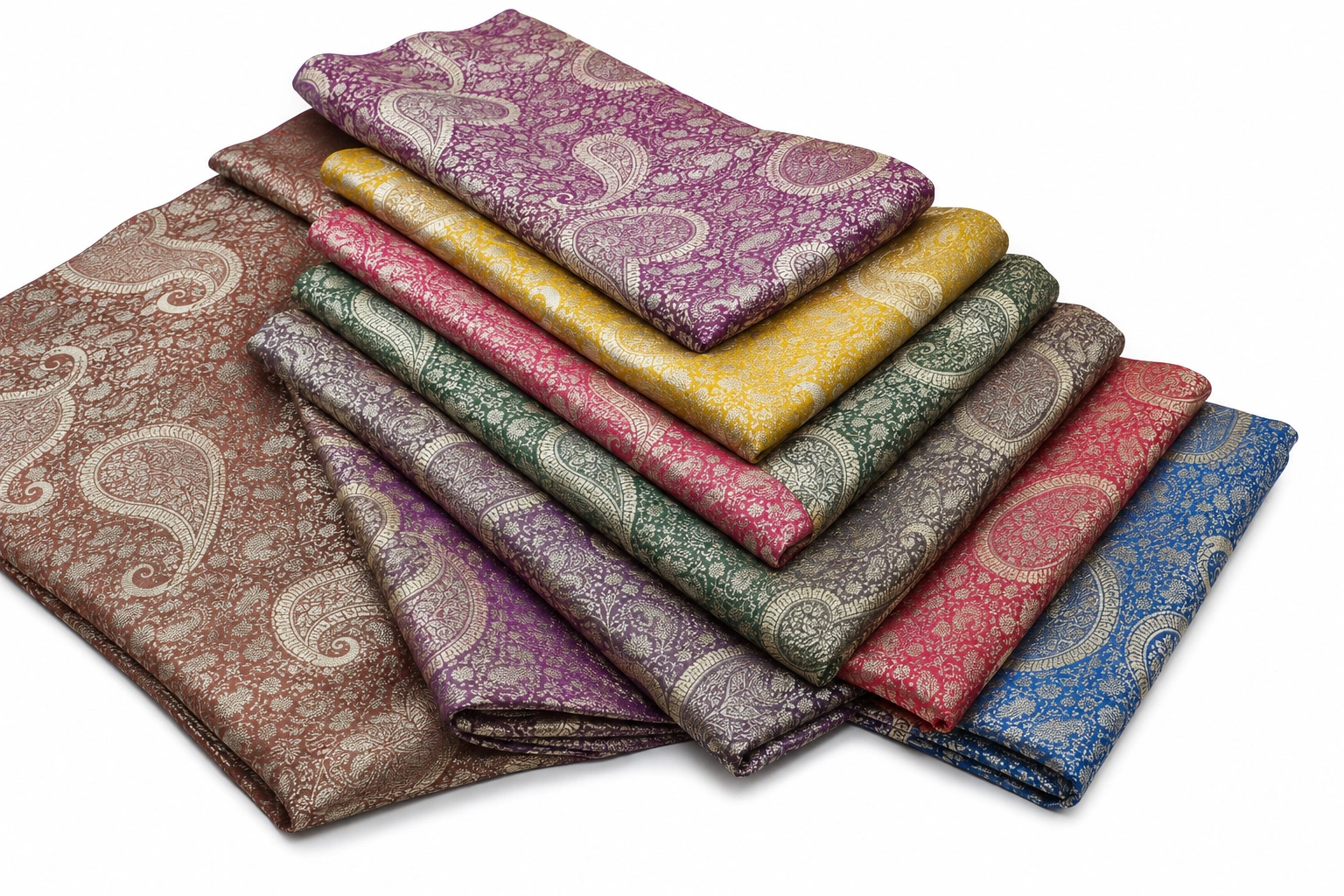
- Paisleys
- Botanical vines
- Mughal-inspired designs
- Shikargah-inspired motifs
- Geometric arrangements
- Zari detailing
What makes this heritage particularly relevant to modern fashion is its ability to evolve.
Today’s men’s fabrics can interpret Banarasi weaving through contemporary geometry, subtle self-patterns, checks, stripes, abstract arrangements and modern colour palettes.
For an Indo-Western designer, this creates an unusual advantage.
The textile can retain a connection with Varanasi’s weaving heritage while the garment itself can be completely contemporary.
Banarasi Jacquard for Indo-Western Men’s Wear
Among the many fabric categories available for Indo-Western fashion, Banarasi jacquard is one of the most versatile.
Jacquard patterns are integrated into the woven construction of the fabric, producing texture and visual depth.
Depending on the design, the surface can be extremely subtle or highly decorative.
This makes jacquard suitable for:
- Indo-Western jackets
- Designer kurtas
- Nehru jackets
- Bandhgalas
- Fusion sherwanis
- Wedding jackets
- Groom wear
- Layered ethnic outfits
A subtle jacquard can create modern minimalism.
A floral jacquard can introduce traditional character.
A geometric design can create a contemporary appearance.
A zari-rich jacquard can provide wedding luxury.
This versatility is one reason Banarasi jacquard fabric for Indo-Western wear is such an important category for men’s designers.
Geometric Banarasi Jacquard for Contemporary Men
Geometry is particularly well suited to men’s Indo-Western fashion.
It provides a visual language that feels structured and modern.
Popular geometric design directions can include:
- Diamonds
- Grids
- Interlocking forms
- Linear patterns
- Abstract shapes
- Architectural geometry
- Small repeated motifs
- Contemporary checks
When produced through jacquard weaving, these designs gain texture and depth that can elevate the final garment.
A small geometric jacquard can work beautifully for a modern kurta.
A stronger pattern can become a statement jacket.
A dark geometric fabric can create a sophisticated reception bandhgala.
For designers trying to move beyond conventional florals, geometry offers considerable creative freedom.
Self-Jacquard Fabrics for Minimal Luxury
One of the strongest directions in modern menswear is understated luxury.
Not every premium garment needs highly visible zari or elaborate patterns.
Self-jacquard can provide richness through texture.
The woven design generally remains close to the base colour, creating a pattern that becomes more noticeable as the light changes.
This makes self-jacquard suitable for customers who want sophisticated garments without excessive ornamentation.
It can work particularly well for
- Minimal Indo-Western jackets
- Contemporary kurtas
- Bandhgalas
- Reception outfits
- Formal festive wear
- Modern groom ensembles
Neutral and pastel colours can create soft daytime styling, while darker shades can produce elegant evening garments.
Banarasi Brocade for Luxury Indo-Western Outfits
For customers looking for greater visual richness, Banarasi brocade offers another direction.
Brocade is especially effective for wedding and ceremonial fashion because of its elaborate woven surface.
Traditional brocade may feature:
- Floral jaals
- Paisleys
- Botanical patterns
- Mughal-inspired designs
- Zari butis
- Heritage motifs
Contemporary brocade can introduce:
- Geometry
- Simplified florals
- Modern metallic effects
- Unusual colour combinations
- More restrained layouts
For Indo-Western garments, brocade can be used across the complete outfit or strategically as a statement textile.
A brocade jacket can be paired with a plain kurta.
A richly woven Nehru jacket can become the centrepiece of an otherwise minimal outfit.
A fusion sherwani can use brocade to retain ceremonial character while experimenting with silhouette.
Katan Silk for Premium Indo-Western Fashion
Katan silk represents an important part of the Banarasi textile tradition.
Its refined silk character makes it suitable for premium garments where elegance is central to the design.
Depending on the weave and construction, Katan-based fabrics can range from understated to richly patterned.
For Indo-Western fashion, this provides several possibilities.
A relatively clean Katan fabric can form the foundation of a modern kurta or layered outfit.
A more elaborate woven fabric can be used for wedding wear.
Katan can also be paired with patterned jackets to create contrast between a refined base textile and a more decorative outer layer.
For buyers searching for premium silk fabric for Indo-Western men’s wear, Katan is an important category to explore.
Raw Silk for Contemporary Indo-Western Garments
Raw silk provides a more visible natural texture.
This surface character can work particularly well in contemporary menswear.
A modern garment does not always require a complex woven pattern.
Sometimes texture alone provides enough visual interest.
Raw silk can be considered for:
- Structured jackets
- Kurtas
- Bandhgalas
- Layered outfits
- Minimal wedding wear
- Contemporary festive garments
It can also be combined with richer Banarasi fabrics.
For example, a textured kurta can be paired with a geometric jacquard jacket.
The contrast between the two surfaces can make the complete outfit more interesting.
Moonga and Chiniya for Distinctive Collections
Designers and retailers benefit from having access to multiple textile categories.
Moonga and Chiniya can provide alternative surface characters depending on their construction.
They can be considered for men’s kurtas, jackets and other occasion-wear garments.
The actual fabric should always be evaluated according to:
- Weight
- Drape
- Texture
- Colour
- Design
- Garment application
This is particularly important in Indo-Western fashion because silhouettes can vary considerably.
Fabrics for Indo-Western Jackets
The jacket is one of the most important garments in contemporary Indo-Western fashion.
A well-selected fabric can transform a simple jacket into the focal point of an entire outfit.
Premium jacket fabrics can include:
- Banarasi jacquard
- Banarasi brocade
- Geometric jacquard
- Floral jacquard
- Self-jacquard
- Checks
- Stripes
- Zari designs
- Heritage-inspired woven fabrics
A richly patterned jacket can be worn over a plain kurta.
A subtle geometric jacket can be combined with tonal garments.
A brocade jacket can create greater wedding richness.
This flexibility makes jackets particularly useful for retailers because one statement piece can create several styling possibilities.
Premium Fabrics for Nehru Jackets
The Nehru jacket remains one of the most adaptable garments in men’s ethnic wear.
It can be traditional, contemporary or somewhere between the two.
Fabric determines much of that identity.
A floral Banarasi fabric creates stronger heritage character.
A geometric jacquard gives the jacket a more modern appearance.
A self-jacquard creates understated elegance.
A brocade provides wedding richness.
Because the garment area is smaller than a full sherwani, designers can often experiment with stronger patterns without overwhelming the complete outfit.
Bandhgala Fabrics for Modern Men
The bandhgala is naturally suited to Indo-Western styling because its structure combines Indian identity with formal tailoring.
For a contemporary bandhgala, fabric choices can range from subtle to elaborate.
Tonal jacquards can create minimal sophistication.
Geometric patterns can add a modern visual identity.
Banarasi florals can provide heritage richness.
Dark shades with restrained metallic details can work particularly well for evening events.
For weddings, lighter shades and antique metallic effects can create a softer appearance.
Indo-Western Kurta Fabrics
The kurta itself is also becoming more experimental.
Modern designers may use:
- Asymmetric hems
- Layered construction
- Shorter lengths
- Structured panels
- Contemporary collars
- Unusual closures
- Contrasting textures
Fabric selection should complement these details.
If the silhouette is highly complex, a relatively subtle fabric may be appropriate.
If the garment construction is simple, the textile can carry more visual detail.
Geometric jacquards and self-patterns are particularly useful for contemporary kurtas because they provide texture without necessarily making the garment look overly traditional.
Fabrics for Fusion Sherwanis
Modern sherwani design increasingly incorporates elements of Indo-Western fashion.
Designers may experiment with asymmetric panels, unusual closures, layered construction and contemporary collars.
A premium woven fabric helps maintain the ceremonial character of these garments.
Banarasi jacquard and brocade are particularly suitable because they provide depth and richness without requiring the entire garment to depend on surface embellishment.
For the modern groom, this can create an outfit that feels luxurious yet individual.
Groom Indo-Western Fabrics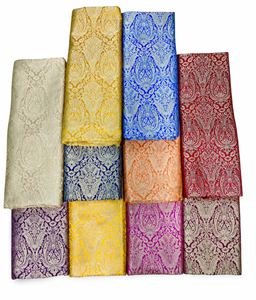
Modern grooms increasingly use different outfits across wedding functions.
This has expanded the possibilities for men’s fabric selection.
A groom may choose:
A pastel jacquard jacket for an engagement.
A contemporary kurta for mehendi.
A metallic Indo-Western jacket for sangeet.
A rich fusion sherwani for the wedding.
A dark bandhgala for the reception.
Each function creates a different fabric requirement.
For designers and wedding retailers, this means groom-wear sourcing should cover several design directions rather than focusing on only one ceremonial textile.
Indo-Western Fabrics for Engagement Wear
Engagement outfits often require a balance between elegance and restraint.
The garment should look special without necessarily matching the richness of the wedding-day sherwani.
Suitable fabrics can include:
- Self-jacquard
- Geometric jacquard
- Subtle florals
- Pastel woven fabrics
- Restrained zari designs
- Refined silk-based textiles
A structured jacket or contemporary bandhgala can create an elegant engagement outfit.
Indo-Western Fabrics for Sangeet
Sangeet functions usually allow greater experimentation.
Evening lighting can make woven metallic details particularly effective.
Rich jacquards, zari fabrics and deeper colours can create strong visual impact.
A statement jacket over a relatively simple base garment is one effective approach.
Geometric metallic designs can provide a modern alternative to conventional floral wedding fabrics.
Reception Fabrics for Men
The reception often calls for a more formal evening aesthetic.
Darker shades such as navy, wine, maroon and other deep colours can work well.
A structured bandhgala made from tonal jacquard can create sophistication.
Subtle metallic geometry can add occasion-wear character.
For customers who do not want to wear a conventional Western suit, a contemporary Indo-Western outfit can provide an elegant alternative.
Pastel Indo-Western Fabrics
Pastels have become an important direction in men’s wedding fashion.
Popular colours can include:
- Baby pink
- Pista
- Sage
- Powder blue
- Lavender
- Peach
- Champagne
- Soft beige
- Ivory
These colours work particularly well for daytime weddings and pre-wedding functions.
When combined with tonal weaving or antique gold detailing, pastels can create sophisticated garments without appearing overly decorative.
Ivory, Cream and Champagne Fabrics
Neutral shades remain extremely versatile.
Ivory and cream can support both traditional and contemporary designs.
A richly woven ivory brocade can become a ceremonial groom garment.
A subtle ivory self-jacquard can create minimalist luxury.
Champagne and beige can provide additional warmth while maintaining a refined appearance.
These colours are especially useful when designers want the woven texture rather than the base colour to become the primary feature.
Dark Indo-Western Fabrics for Evening Wear
Evening events create opportunities for deeper colours.
Navy, wine, maroon and other dark shades can work particularly well for bandhgalas and jackets.
Geometric patterns can appear sophisticated against dark backgrounds.
Metallic details can become more visible under evening lighting.
This combination makes darker fabrics particularly suitable for receptions, cocktail functions and formal celebrations.
Zari in Indo-Western Men’s Fabrics
Zari remains an important element of Banarasi textiles, but its use in contemporary menswear requires balance.
A modern kurta may need only subtle metallic accents.
A wedding jacket can support stronger zari.
A groom’s fusion sherwani may require richer detailing.
The tone of the metallic element also matters.
Bright gold creates a more traditional ceremonial appearance.
Antique gold can feel softer.
Copper can add warmth.
Muted metallic effects can work particularly well with modern geometry.
The amount and character of zari should therefore be selected according to the final garment.
Meena Colours in Contemporary Men’s Fabrics
Meena detailing can introduce carefully controlled colour into woven designs.
In men’s fashion, small colour accents can create significant visual depth.
Pista, baby pink, copper, blue and other shades can be incorporated into geometric or floral motifs.
This can help designers coordinate the fabric with a wedding palette without making the textile excessively colourful.
For modern men’s wear, restraint is often the key.
Floral Indo-Western Fabrics
Floral motifs remain an important part of Banarasi design.
However, modern Indo-Western garments can reinterpret them.
Instead of using only large traditional florals, designers can explore:
- Small floral butis
- Tonal botanical motifs
- Simplified vines
- Structured floral repeats
- Florals combined with geometry
- Antique metallic floral designs
This creates a connection with heritage while allowing the garment to remain contemporary.
Geometric vs Floral: Which Is Better for Indo-Western Wear?
There is no single correct answer.
The choice depends on the customer and garment.
Geometric patterns generally create a cleaner and more modern appearance.
Floral patterns provide a stronger connection with traditional Indian design.
For younger customers seeking contemporary styling, geometry may be particularly effective.
For wedding garments requiring heritage richness, florals may be appropriate.
A strong collection should ideally include both.
Checks and Stripes for Modern Indo-Western Fabrics
Checks and stripes are familiar elements in men’s fashion, making them especially interesting for fusion clothing.
When woven through jacquard techniques, these familiar patterns gain a distinctive textile character.
Tonal checks can create understated jackets.
Metallic lines can create festive stripes.
Complex geometric checks can work well for modern kurtas and bandhgalas.
These patterns can help designers create Indo-Western garments that feel different from conventional ethnic wear.
Pattern Scale Matters
One of the most important considerations when selecting fabric is motif size.
A fabric may look excellent as a roll but behave differently once it is cut.
Small Motifs
Small repeated patterns are highly versatile and generally work across different garment panels.
Medium Motifs
Medium designs provide stronger visual impact while remaining manageable.
Large Motifs
Large motifs can create dramatic garments but require careful placement.
This becomes particularly important for asymmetric Indo-Western designs because the garment may contain multiple panels and unusual seam lines.
Fabric Weight and Drape for Indo-Western Garments
Fabric appearance alone is not enough.
Weight and drape strongly influence the final garment.
A flowing layered silhouette may require different characteristics from a structured bandhgala.
A long jacket may need enough body to maintain its shape.
A kurta may require greater movement.
Designers and manufacturers should therefore evaluate:
- Fabric weight
- Drape
- Surface texture
- Structure
- Width
- Garment application
These characteristics are particularly important when sourcing fabric for commercial production.
Indo-Western Fabrics for Fashion Designers
For designers, Indo-Western fashion creates an opportunity to reinterpret traditional textiles.
A Banarasi fabric does not have to become a conventional garment.
A floral jacquard can become an asymmetric jacket.
A geometric fabric can become a modern bandhgala.
A brocade can be used on selected panels.
A subtle Katan-based fabric can become part of a layered ensemble.
This freedom allows designers to work with Indian textile heritage while developing their own design language.
Premium Fabrics for Boutiques and Retail Stores
Retailers need variety because Indo-Western customers do not all want the same aesthetic.
A balanced collection might include:
- Subtle self-jacquards
- Geometric fabrics
- Contemporary florals
- Wedding brocades
- Pastels
- Dark evening fabrics
- Checks
- Stripes
- Zari-accented designs
This allows retailers to serve customers looking for different levels of tradition, luxury and modernity.
Wholesale Indo-Western Fabrics from Varanasi
Wholesale buyers approach fabric sourcing differently from individual customers.
Commercial requirements can include:
- Quantity
- Fabric width
- Weight
- Colour
- Motif size
- Design repeat
- Intended garment
- Production requirements
- Repeat availability
- Delivery schedule
- Destination
Providing these details to a supplier can help streamline selection.
For businesses searching for a wholesale Indo-Western fabric supplier in Varanasi, it is particularly useful to specify whether the fabric will be used for kurtas, jackets, bandhgalas, sherwanis or other garments.
Indo-Western Fabrics for Garment Manufacturers
Garment manufacturers need textiles that work both visually and practically.
Before confirming larger quantities, manufacturers should evaluate how the pattern behaves during cutting.
Design repeat can affect fabric consumption.
Motif size can influence panel placement.
Width affects production calculations.
Fabric weight influences garment structure.
These considerations are particularly important for Indo-Western garments because contemporary silhouettes may involve unusual cuts and multiple panels.
Banarasi Fabrics for Men’s Fashion Designers
For fashion labels, distinctive textiles can help establish brand identity.
A designer may build a collection around modern geometry.
Another may reinterpret Mughal-inspired florals.
A wedding brand may focus on antique metallic brocades.
A contemporary label may develop tonal jacquards and understated textures.
Varanasi’s textile vocabulary provides room for all these directions.
This is why sourcing Banarasi fabric can become part of the creative process rather than simply a purchasing activity.
Premium Indo-Western Fabrics for International Buyers
Indian ethnic and wedding fashion has an international customer base.
Designers, retailers, boutiques and garment manufacturers serving customers in the United States, United Kingdom, UAE, Canada, Australia, Europe and the Middle East may source fabrics from India for wedding and occasion-wear collections.
Indo-Western fashion can be particularly relevant internationally because it allows customers to express Indian cultural aesthetics through contemporary clothing.
A modern jacket may be easier to integrate into an international wardrobe than a highly traditional garment.
A bandhgala can provide an alternative to a conventional formal suit.
A fusion sherwani can offer the groom something distinctive.
For overseas buyers, the versatility of these fabrics creates multiple commercial possibilities.
What International Buyers Should Consider
Before sourcing fabrics internationally, professional buyers should clearly define their requirements.
Useful information can include:
- Intended garment
- Fabric category
- Design preference
- Colour
- Quantity
- Width requirements
- Destination
- Production timeline
A boutique looking for ten distinctive wedding fabrics has very different needs from a manufacturer planning a larger garment collection.
Clear communication can make sourcing more efficient.
Why Designers Are Looking Beyond Traditional Floral Fabrics
Traditional florals remain important, but modern menswear is becoming more diverse.
Designers increasingly explore geometry, checks, stripes and abstract woven patterns because these designs can appeal to customers seeking contemporary style.
This does not reduce the importance of Banarasi heritage.
Instead, it demonstrates how weaving traditions can evolve.
The technique can remain connected to Banaras while the design vocabulary changes.
This adaptability is essential for keeping traditional textile knowledge relevant to future generations of fashion.
Traditional Craftsmanship and Contemporary Design
One of the most exciting characteristics of Indo-Western fashion is that traditional craftsmanship does not need to produce only traditional garments.
A heritage weaving technique can create modern geometry.
A classic floral can appear in an unexpected colour.
Brocade can become a minimalist jacket.
Jacquard can become a contemporary bandhgala.
Katan silk can become part of a layered fusion outfit.
The strongest modern collections often do not reject tradition.
They reinterpret it.
How to Select Premium Indo-Western Fabric
Before buying, consider several questions.
What garment will be made?
The fabric should complement the silhouette.
Is the outfit for daytime or evening?
Colour and metallic detailing may change accordingly.
Is the customer looking for traditional or contemporary styling?
This helps determine whether floral, geometric or self-patterned fabric is appropriate.
How much zari is required?
The amount should match the formality of the event.
What motif scale works with the garment?
Complex silhouettes may require smaller patterns.
How should the fabric drape?
This depends on whether the garment is structured or flowing.
What quantity is required?
Retail, wholesale and production requirements should be discussed clearly.
Choubey Silk – Premium Indo-Western Fabric Supplier in Varanasi
At Choubey Silk, we focus on premium fabrics for the evolving world of men’s ethnic and occasion wear.
Our collections are suitable for:
- Indo-Western outfits
- Designer kurtas
- Nehru jackets
- Bandhgalas
- Sherwanis
- Wedding jackets
- Groom wear
- Festive garments
- Designer menswear
Our fabric selection includes Banarasi jacquard, brocade, Katan silk, Moonga, Chiniya, raw silk, satin-based fabrics and other premium woven textiles.
We cater to individual customers as well as designers, boutiques, retailers, wholesalers, garment manufacturers and international textile buyers.
How to Enquire for Indo-Western Fabrics
Providing clear requirements helps identify suitable fabrics.
For example:
“I need geometric Banarasi jacquard for men’s Indo-Western jackets.”
“I am looking for pastel fabric for a daytime groom collection.”
“I require Banarasi brocade for luxury wedding jackets.”
“I need dark self-jacquards for reception bandhgalas.”
“I require wholesale Indo-Western fabrics for garment production.”
Include information about:
- Garment type
- Preferred design
- Colour
- Fabric category
- Quantity
- Destination
- Required timeframe
This makes professional sourcing considerably more efficient.
Why Choubey Silk Focuses on Men’s