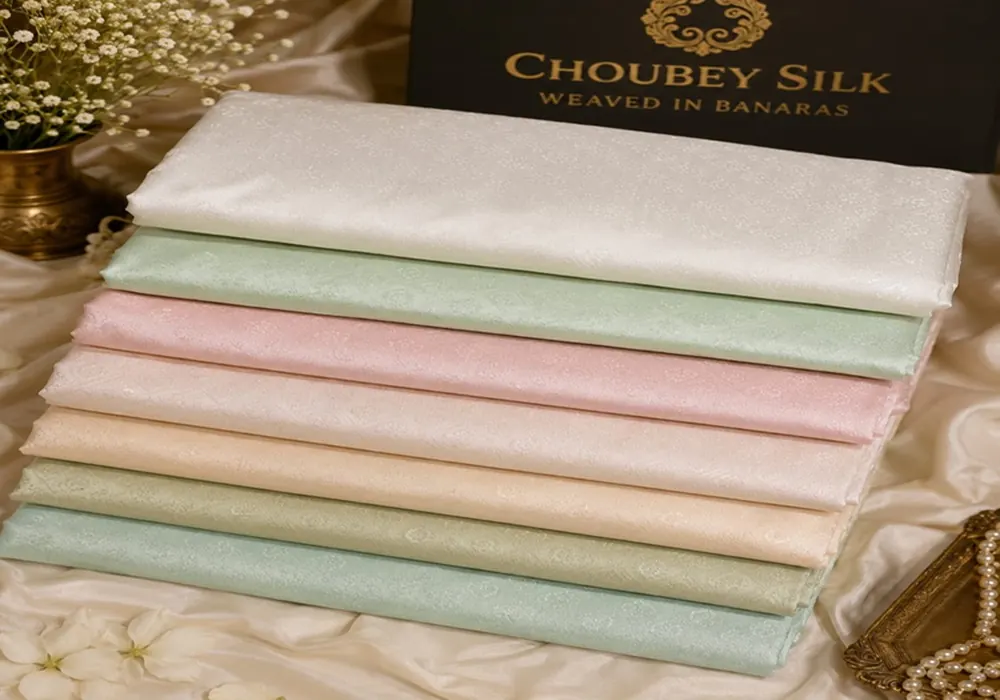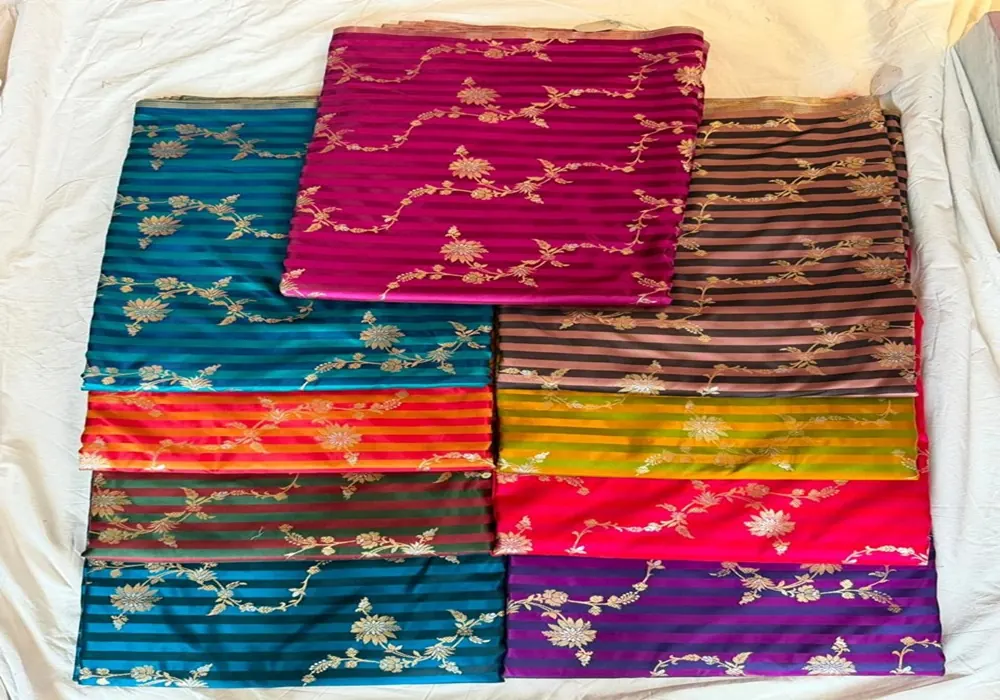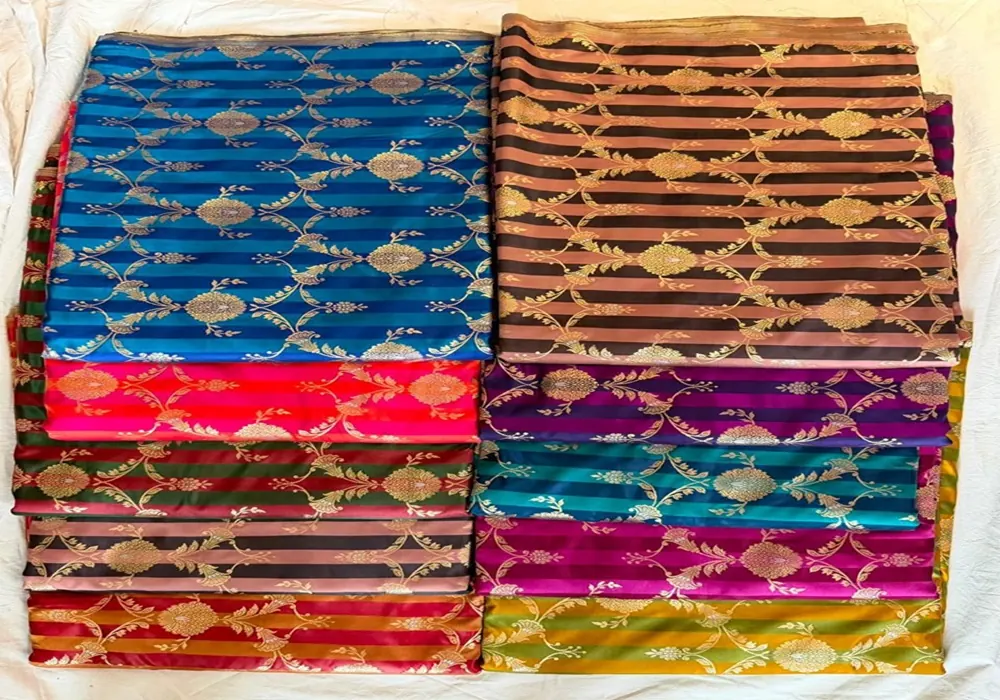
Among Varanasi’s many specialised weaves, Rangkat brocade stands out as one of the most technically demanding and visually striking. The name comes from “rang” (colour) and “kat,” referring to the practice of dyeing warp threads in multiple shades before weaving even begins. Unlike standard brocade,…
Read MoreNot every Banarasi jacquard fabric is handwoven , and that’s not necessarily a bad thing, as long as buyers know what they’re getting. Handloom jacquard is produced on traditional pit looms operated manually by artisans, resulting in subtle irregularities, a slightly textured handfeel, and motifs…
Read MoreGSM, or grams per square metre, is the single most overlooked spec when buying Banarasi fabric , yet it determines how a garment will actually fall on the body. A high-GSM brocade (typically above 250) is dense, structured, and holds its shape, making it ideal…
Read MoreZari is what gives Banarasi brocade its signature gold or silver glow , but not all zari is created equal. Traditional “real” zari uses fine silver wire coated in gold, while most modern fabric uses “tested” zari (a silver-copper alloy) or, increasingly, synthetic metallic polyester…
Read MoreMost buyers know Banarasi brocade for its heavy gold zari work, but few have heard of Tanchoi , a weave that achieves intricate patterns using only coloured silk yarns, with little or no zari at all. Originally brought to Varanasi from China via Surat weavers…
Read MoreFor boutique owners, designers, and wholesale buyers placing their first bulk order with a silk supplier, knowing the right questions to ask upfront prevents costly misunderstandings down the line. Here’s a practical checklist worth working through with any potential supplier. Start with minimum order quantities…
Read MoreWhile Banarasi silk is best known for garments, its richness and durability make it an increasingly popular choice for luxury home décor and upholstery applications , a category many buyers overlook entirely. Cushion covers and decorative throw pillows are among the most accessible entry points….
Read MoreAs conscious consumption grows among fashion buyers, more designers, boutiques, and individual customers are asking thoughtful questions about how their silk fabric is sourced , and suppliers should be ready with transparent answers. A key question concerns artisan welfare. Genuine handloom weaving in Varanasi supports…
Read MoreThese three terms get used interchangeably by many buyers, but they actually describe distinct categories within the broader world of Banarasi woven silk, and understanding the differences helps when sourcing fabric for specific garments. Jacquard is, technically speaking, a weaving method rather than a fabric…
Read MoreDespite its popularity, Banarasi silk is surrounded by a surprising number of myths that often lead buyers to make less-informed purchasing decisions. Let’s clear up a few of the most persistent ones. Myth one: all Banarasi silk is handwoven. In reality, both handloom and powerloom…
Read MoreBanarasi silk has long held a special place in Indian gifting culture, carrying symbolic weight that goes beyond its material value , and understanding this context helps both individual buyers and retailers position fabric gifting more effectively. For weddings, gifting silk fabric to the groom…
Read MoreFor boutique owners, fashion designers, and wholesale buyers, choosing where to source silk fabric is a decision that affects margins, quality consistency, and long-term brand reputation , and Varanasi consistently comes out ahead of other regional silk hubs for several concrete reasons. First is variety…
Read More